

Here’s the thing. You’ve probably heard people talking about a big lighting ban that kicks in around 2025. Some folks call it the 2025 LED phasing ban, but that wording trips people up.
What this really is comes down to state policies that phase out older lighting technologies and push homeowners toward LED lighting instead. If you live in the US and you’re planning home upgrades, lighting repairs, or even a full remodel, this matters. Let’s break it down so you actually understand what’s happening, why it matters, and what it really means for your home.
First, and this is important, there isn’t a federal law nationwide that bans LEDs in 2025. No rule says you can’t buy or use LED bulbs after that date. Instead, states are phasing out older technologies like fluorescent lights, especially those that contain mercury, and encouraging or requiring LEDs as the replacement.
That’s why people continue to discuss a 2025 deadline. It’s really a patchwork of state rules that tighten the screws on outdated lighting, making LEDs the default choice.
Here’s what every homeowner should understand in plain terms.
What Exactly Is Being Phased Out

Fluorescent lighting has been a standard in homes and businesses for decades. You’ve probably seen it in garages, kitchens, basements, workshops, and utility rooms. These include:
- Compact fluorescent lamps (CFLs)
- Linear fluorescent tubes
- Pin-based fluorescent bulbs used in older fixtures
Many U.S. states have passed laws banning the sale of most mercury-containing fluorescent lamps (compact fluorescent lamps and linear fluorescent tubes) because LEDs are more efficient and mercury is toxic. States with active or phased bans around January 1, 2025 include California, Colorado, Oregon, Rhode Island, and Vermont, where the sale of key fluorescent products is banned by that date. Massachusetts has bans on high-CRI fluorescent tubes. New Jersey restricts high-CRI fluorescent lamp sales. New York has a high-CRI fluorescent ban. Other states also have bans with different timelines. Fluorescent ban details vary by lamp type and effective date.
Other states, including Hawaii, Minnesota, Illinois, and Maine, are following close behind with phase-outs extending into 2026 and 2027.
This isn’t limited to commercial buildings or office ceiling lights. Many CFLs used in homes, especially in kitchens and hallways, are also affected.
Why States Are Doing This
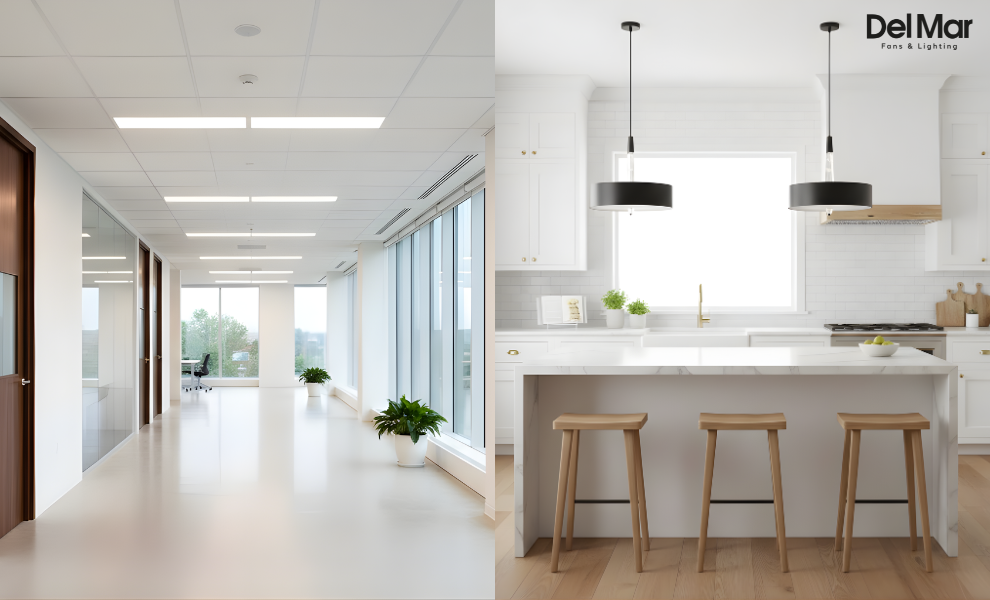
Let’s be straight about the logic.
Fluorescent lights are old tech, and many contain mercury. Mercury is toxic. When bulbs break or are thrown away improperly, it creates real environmental and health risks.
LED lighting, on the other hand, is mercury-free, far more energy-efficient, and lasts much longer. From a policy standpoint, LEDs are the obvious replacement.
You don’t have to care about politics to understand the upside. LEDs use less electricity, reduce maintenance, and lower long-term costs. That applies whether you’re talking about basic bulbs, pendant lights over a kitchen island, or large outdoor fixtures.
Fluorescent Lighting vs LED Lighting
| Technology | Uses gas-filled tubes and mercury vapor to produce light | Uses solid-state semiconductor technology |
| Mercury Content | Contains mercury, a toxic substance | Mercury-free and safer for homes and the environment |
| Environmental Impact | Requires special disposal; broken bulbs pose contamination risks | Environmentally friendly with no hazardous waste concerns |
| Energy Efficiency | Uses more electricity for the same light output | Uses 50–70% less energy for equivalent brightness |
| Heat Generation | Produces noticeable heat | Emits very little heat |
| Lifespan | Typically lasts 8,000–15,000 hours | Lasts 25,000–50,000+ hours |
| Light Quality Over Time | Flickers and dims as it ages | Maintains consistent brightness |
| Maintenance Needs | Frequent bulb replacements | Minimal maintenance required |
| Design Flexibility | Limited shapes and fixture options | Supports bulbs, pendant lights, strips, recessed, and outdoor fixtures |
| Operating Cost | Higher long-term energy and replacement costs | Lower long-term cost of ownership |
| Safety | Fragile glass with hazardous contents | Durable and safer to handle |
| Policy Direction | Being phased out in many regions | Preferred replacement technology |
If you want to see how these state rules are rolling out, Pacific Energy Concepts keeps an updated list of states banning fluorescent lights.
What This Means for Your Home

Pay attention here, because this is the part that actually affects your day-to-day life.
You do not have to throw out your existing fluorescent bulbs on January 1, 2025. There’s no rule forcing you to empty your storage closet or rip out working fixtures. You can keep using what you already own.
The ban affects new sales, not existing installations.
But here’s the catch. Replacement bulbs will get harder to find. Many LED light stores and big box retailers have already shifted inventory toward LEDs. Some have stopped carrying fluorescent tubes altogether.
So when a bulb burns out, you’ll likely be choosing an LED replacement whether you planned to or not.
The Practical LED Switch
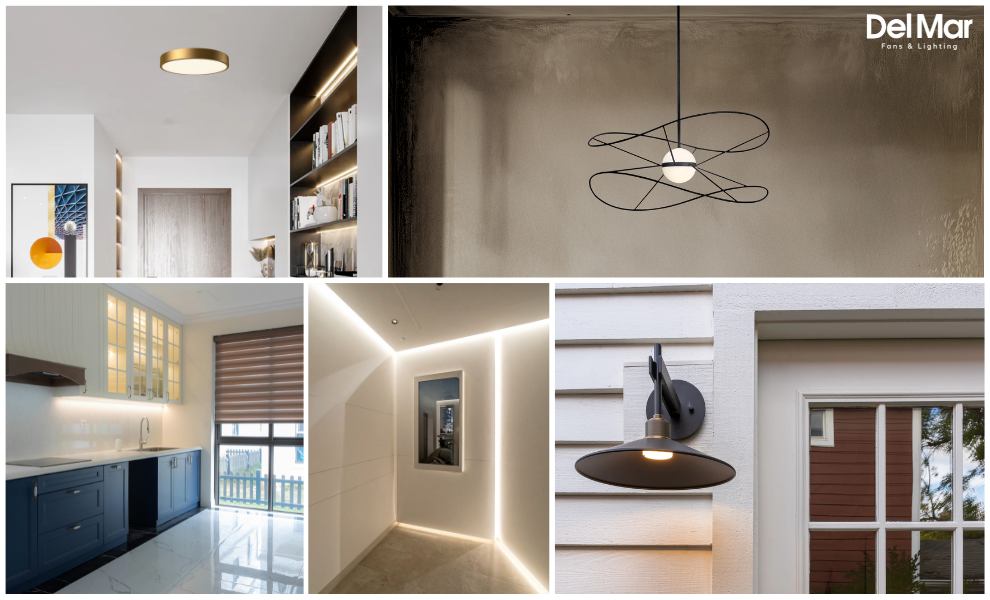
LEDs today come in every imaginable format.
You’ll find LEDs for:
- Traditional ceiling fixtures
- Decorative pendant lights
- Under-cabinet LED lighting in kitchens
- Flexible LED strip lights for accent and task lighting
- Outdoor LED lighting for patios, pathways, and security
If you’re replacing fluorescents, you generally have two options:
- Use LED tubes designed to work in existing fixtures
- Replace the entire fixture with an LED version
Sometimes swapping the fixture is easier, especially if the old ballast is already failing. This is often the case in garages, workshops, and older utility spaces.
The key is choosing the right LED. Pay attention to brightness (lumens), color temperature, and compatibility with dimmers or smart controls.
Money, Rebates, and Incentives
Here’s something many homeowners miss.
Because states and utilities want people to switch to LEDs, rebates and incentives are often available. These programs can apply to everything from basic bulbs to larger upgrades like outdoor fixtures or full kitchen lighting projects.
Before the fluorescent bans fully take effect, you may find rebates that help offset the cost of switching to LEDs, including specialty options like under-cabinet LED lighting or exterior installations.
Once fluorescent sales are fully banned, some of these programs may shrink or disappear. Acting sooner can save real money.
No, LEDs Are Not Being Banned
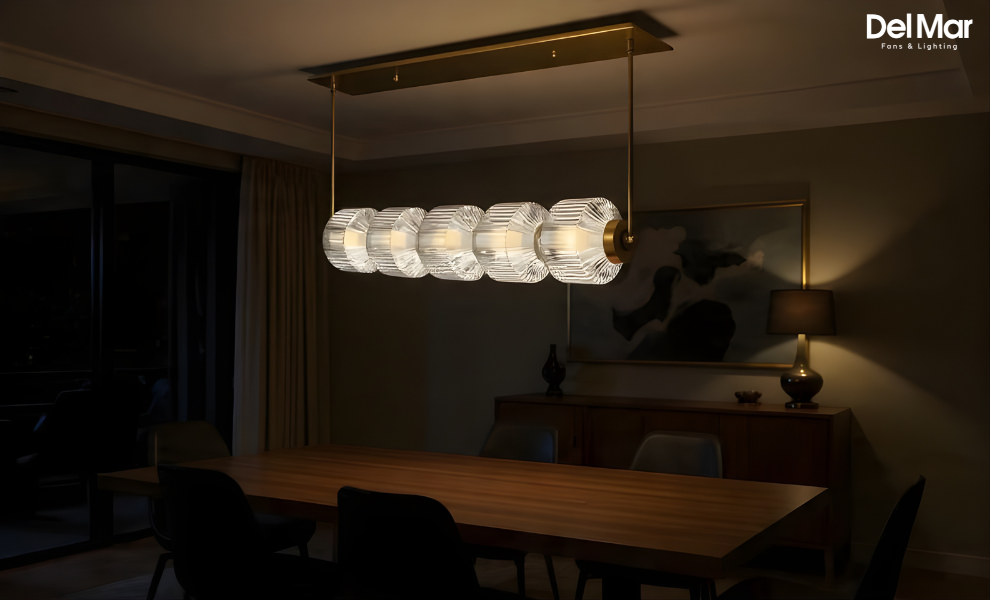
This myth needs to be put to rest. LEDs are not being banned in the U.S., full stop. Current regulations are focused on fluorescent lighting, not LEDs. In fact, LEDs are the replacement technology, which is why leading lighting brands are investing heavily in LED-only product lines for residential, commercial, and outdoor applications.
Today’s LEDs are more affordable, far more energy-efficient, and easier to recycle than ever before. That progress is exactly why states are confidently phasing out outdated fluorescent technology.
For the most up-to-date details, bookmark this active list of U.S. States banning fluorescent lights.
What You Should Do Next
This is the part that actually helps.
Take inventory of your home lighting. Look at what’s installed and what still relies on fluorescents.
If fluorescents are used in places you depend on daily, like garages, kitchens, or workshops, start planning your LED replacements now.
Why now? Because once stores stop selling fluorescent bulbs, you won’t have many options left. You’ll be relying on whatever LED products are available at that point.
Check local rebates before they expire. And don’t automatically buy the cheapest LED you see. Quality matters. Good LEDs last longer, look better, and save more money over time.
Common Homeowner Concerns
What about light quality?
Modern LEDs offer warm, comfortable light that closely matches traditional bulbs. The harsh blue light people complained about years ago isn’t the norm anymore.
Can I retrofit LED tubes into old fixtures?
Often yes. Many LED tubes are designed for easy retrofits. In some cases, replacing the fixture is simpler and more reliable.
What about specialty lighting?
From workshops to decorative pendant lights and outdoor installations, there’s an LED solution for almost every use case today.
Final Thoughts
2025 isn’t a cliff. It’s a transition.
Fluorescent lighting is being phased out because better technology exists. That technology is LED lighting.
Here’s what this really boils down to:
- Fluorescent lights are being removed from sale in many states
- LEDs are not banned; they are the replacement
- Homeowners should plan ahead instead of scrambling later
- Existing bulbs can still be used, but replacements will get scarce
- Rebates and incentives can help offset upgrade costs
There is no mystery here. This shift means cleaner lighting, lower energy bills, and fewer toxic materials in your home.
That’s not hype. That’s just progress done quietly, one light at a time.
