




Related Categories

Fanimation Ceiling Fans for a Modern Indoor Design | 10% OFF
Shop Fanimation Ceiling Fans by Category
Filter Results By
A ceiling fan can be one of the most noticeable fixtures in a room, so it needs to work with the space as well as move air. Fanimation has built its identity around that balance since 1984, when founder Tom Frampton began the company with three distinctive fan designs. More than four decades later, Fanimation continues to combine design, airflow, and technology across ceiling fans for indoor and outdoor spaces.
Today, the collection ranges from clean contemporary designs to coastal fans, large-span models, low-profile options, and fans with integrated or optional lighting. Smart controls, DC motors, and CCT lighting add another layer of flexibility without taking away from the design of the fan.
What Makes Fanimation Ceiling Fans Different?
Fanimation's approach to ceiling fans has always started with design. The brand's early fans, including the Palmetto and Bourbon Street, moved away from conventional fan shapes and helped establish a more design-focused direction. That idea continues today, with blade shapes, motor housings, finishes, and proportions used to give each fan its own character.
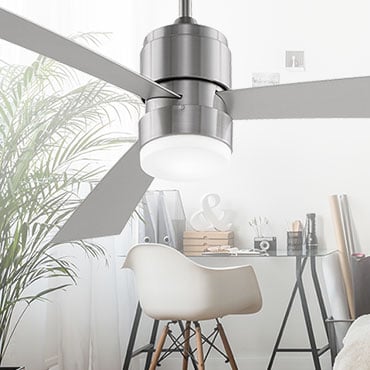
The Kute 52" ceiling fan, for example, keeps the design deliberately simple. Its clean three-blade profile and understated housing allow it to blend easily into contemporary and minimalist spaces without becoming a visual distraction. Fanimation also offers Kute in different sizes and finishes, giving the same design language more flexibility across rooms.
Choosing the Right Fan for the Room
Fan size has a direct effect on how comfortably air moves through a room, but the largest fan is not automatically the best choice. Blade span, ceiling height, room dimensions, and the space's layout all need to work together.
For larger rooms and expansive outdoor areas, Fanimation offers larger blade spans that can move more air across a wider area. The Pendry 72" outdoor ceiling fan is a good example of how scale can become part of the design as well as the performance. Its seven-blade configuration and refined housing give a large fan a more substantial but still considered presence.
Our Ceiling Fan Size Guide explains how room size, blade span, CFM, and ceiling height work together when choosing a fan.
Fanimation Brings Technology Into the Fan
Technology is another part of how Fanimation has evolved the ceiling fan. Modern DC motors can offer more speed settings and efficient operation, while smart controls allow compatible fans to be adjusted from a connected device. Lighting can also be integrated into the fan or added through compatible light kits.
The GlideAire smart ceiling fan brings these features together without making them the focus of the design. Its simple three-blade form is paired with a 16-speed reversible DC motor and built-in fanSync Wi-Fi, allowing the fan to become part of a connected home.
Lighting can be just as flexible. The TorchAire 64" ceiling fan incorporates both an uplight and downlight, so the fixture can provide air movement while contributing to the room's overall lighting. Its integrated, dimmable LED system also offers multiple color-temperature settings.
For help understanding connected fans and smart-home compatibility, see our Smart Ceiling Fan Compatibility Guide.
Outdoor Fans for Patios, Porches and Coastal Homes
Choosing an outdoor ceiling fan starts with the location. A covered porch, screened patio, exposed outdoor area, and coastal home do not necessarily require the same fan rating, so the environment should guide the selection.
Fanimation offers damp-, wet-, and marine-grade fans across its outdoor collection. This gives the brand room to address different outdoor settings while maintaining the same attention to design found throughout its indoor fans.
For coastal spaces, the Aviara coastal 52" ceiling fan is specifically designed for humid and salt-air environments with a marine-grade wet rating. Its design remains clean and residential rather than looking overly specialized, which helps it fit naturally into coastal homes and outdoor living spaces
Our Indoor vs. Outdoor Ceiling Fans Guide explains the difference between dry, damp, wet, and marine-grade locations.
When Ceiling Height Changes the Choice
Room height can narrow the choice of ceiling fan, particularly in bedrooms, smaller living spaces, and rooms with lower ceilings. A fan that hangs too low can interfere with the room, while one that sits too close to the ceiling may not move air as effectively.
Fanimation offers low-profile and flush-mount options for these situations. The Kute, available in multiple blade spans and with a close-to-ceiling kit, shows how a lower installation can still retain the clean design and performance associated with the collection.
For more guidance, see our Low-Profile and Hugger Ceiling Fan Guide.
Bring Fanimation Into Your Space
Fanimation gives you more to consider than airflow alone. Its collection brings together distinctive fan designs, thoughtful proportions, modern motor technology, lighting, and smart controls, making it easier to choose a fan that works with both your space and how you use it.
Looking for an outdoor fan? Explore Fanimation Outdoor Ceiling Fans for designs suited to covered patios, porches, and more exposed outdoor spaces, including damp-, wet-, and marine-grade options.
Frequently Asked Questions About Fanimation Ceiling Fans
Q. What size Fanimation ceiling fan is best for a 12 × 12 room?
A. A 52-inch Fanimation ceiling fan is generally a good starting point for a 12 × 12 room, but the ideal size also depends on ceiling height, room layout, and the amount of airflow needed. Larger rooms may benefit from a wider blade span. See our Ceiling Fan Size Guide for room-by-room sizing guidance.
Q. Can you use a Fanimation ceiling fan on a covered porch?
A. Yes. Fanimation offers damp-rated fans designed for covered outdoor areas such as porches and screened patios. For spaces exposed directly to rain or other weather, choose a Fanimation model with an appropriate wet-location rating.
Q. Are Fanimation ceiling fans good for coastal homes?
A. Yes. Fanimation offers marine-grade ceiling fans designed for coastal environments where humidity and salt air can be a concern. When choosing a coastal fan, look for a marine-grade or wet-location rating rather than relying on the fan's appearance alone.
Q. Which Fanimation ceiling fans are compatible with smart-home controls?
A. Select Fanimation fans are compatible with fanSync Wi-Fi technology, allowing control through compatible smart-home systems. Compatibility depends on the specific fan and control system, so check the model's listed controls before purchasing. Our Smart Ceiling Fan Compatibility Guide explains the main compatibility considerations.
Q. Can a Fanimation ceiling fan be installed on a low ceiling?
A. Yes. Fanimation offers flush-mount and low-profile solutions for rooms where ceiling clearance is limited. The correct option depends on the available ceiling height and the fan's installation requirements. Our Best Ceiling Fans for 8-Foot Ceilings Guide provides more specific guidance.
Q. Do Fanimation ceiling fans have replaceable or integrated LED lights?
A. Fanimation offers both fans with integrated LED lighting and models that can use compatible LED light kits. Some compatible options also provide CCT Select technology, which allows the light's color temperature to be adjusted.
Q. What is the difference between Fanimation's indoor, damp-rated, and wet-rated fans?
A. The difference is based on the amount of moisture the fan is designed to withstand. Indoor fans are intended for dry locations, damp-rated fans are suited to protected areas exposed to humidity or moisture, and wet-rated fans can be used where direct water exposure is possible. For a detailed explanation, see our Indoor vs. Outdoor Ceiling Fans Guide.
