

Have you ever considered that a badly sized ceiling fan could reduce the effectiveness of cooling by 30%, making you feel irritated and uncomfortable in the spaces in which you spend the majority of your time? The choice of a large modern ceiling fan isn't only about filling the ceiling with air, but it's about maximizing airflow, improving the design of your home, and maximizing efficiency of energy for larger living spaces.
Large rooms present unique cooling challenges. Traditional fans aren't able to generate enough air to provide an ambiance of comfort that is noticeable in areas larger than 400 sq feet. That's where the big modern ceiling fan fans are available that combine massive blades, modern design and powerful motors to change the way you feel in your house's biggest spaces.
In this complete guide, you'll find all you should know about choosing how to install, maintain, and repair the most big modern ceiling fan that is suitable for large spaces. The guide will cover the sizing specifications and different types of motors, blade designs in terms of energy efficiency, design considerations, as well as practical maintenance strategies to assist you in making an informed choice.
What is a Big Modern Ceiling Fan?
Big Modern Ceiling Fan is a modern-day air circulation device whose blade spans between 60-96 inches, specifically designed for spaces larger than 400 square feet. In contrast to traditional decorative fans these models are designed to perform alongside aesthetics. They feature simple lines, minimalist profiles with industrial styles that compliment contemporary interiors.
They are specifically designed to work in larger spaces, like great rooms, master bedrooms, living areas with open concept covered patios, as well as commercial spaces. They are able to move more air than traditional 52-inch models and create an airy breeze that flows through the entire space instead of just under the fan.
Big Modern Ceiling Fan are big and can be found in homeowners who appreciate both function and design. They're perfect for those dealing with high ceilings, sprawling layouts or rooms where conventional cooling methods don't work. They are also appealing to those who would like their cooling system to complement rather than distract from their style.
Why Big Modern Ceiling Fans Matter for Home Comfort
Efficiency in Energy Efficiency that saves money
Big Modern Ceiling Fan consumes around 75 percent less energy than central air conditioning in order to attain similar levels of comfort. In addition, by creating a wind chill effect, these fans let the user raise their thermostat by up to 4-6 degrees, without sacrificing comfort. This can cut down the cost of cooling significantly during hot seasons.
Big Modern Ceiling Fan equipped with DC motors draw only 20-30 watts in low settings, while circulating air through a 600-square-foot space. Compare this with air conditioners that consume up to 5,000-3,000 watts, and the savings evident immediately.
Superior Air Circulation Benefits
Large ceiling fans circulate air effectively throughout your room, avoiding the hot or cold areas that are common in the majority of modern houses. The wider blades allow for larger airflow patterns, reaching the corners and seats that the smaller fans are unable to efficiently serve.
The constant air flow aids in balancing the temperature between ceiling and floor, particularly in rooms with high or vaulted ceilings in which warm air naturally gathers. In winter, changing the direction of the fan redistributes warm air downwards, enhancing the efficiency of heating and comfort.
Health and Indoor Air Quality
Continuous air circulation helps reduce humidity, prevents the growth of mold and assists in removing pollutants in the air. This is done by keeping it flowing through the HVAC unit more often. This creates a healthier indoor environment, particularly beneficial for allergy sufferers and respiratory-sensitive individuals.
What is a Big Modern Ceiling Fan Works
Understanding the mechanics can help to select the correct fan to use it efficiently. These units can bring comfort to your home:
1. Motor Activation When you switch the fan on, it starts to rotate on the axis of the blade. Modern fans are powered by AC (alternating current) or DC (direct current) motors which have DC motors providing greater performance and a quieter operation.
Step 2 - The Pitch and Rotation of the Blade: While blades spin with a slant (typically 12- 15 degrees) cut through the air and push it downwards in summer. The longer blade span covers a larger area every time it rotates, and moves considerably greater cubic feet of air per second (CFM) than smaller fans.
Step 3 - Airflow Pattern: The creation of air that is pushed downward by the blades is spread outward when it touches furniture or floors creating an airflow pattern that is circular throughout the space. This creates the wind-chill effect which can make you feel cooler, without actually lowering the temperature.
Step 4 - The Air Return Cycle: As the air is dispersed horizontally, it then is able to rise along the walls, before returning to the area where the fan's intake is over the blades. This results in continuous circulation that keeps your space comfortable throughout the space.
Step 5 - Reverse operation (Winter mode): When reversed, fans push air upwards by advancing the fan assembly upwards. This is pushing warm air from the ceiling down the walls. This soft redistribution helps to eliminate the stratification of temperature without generating the impression of a breeze.
The types of Big Modern Ceiling Fan
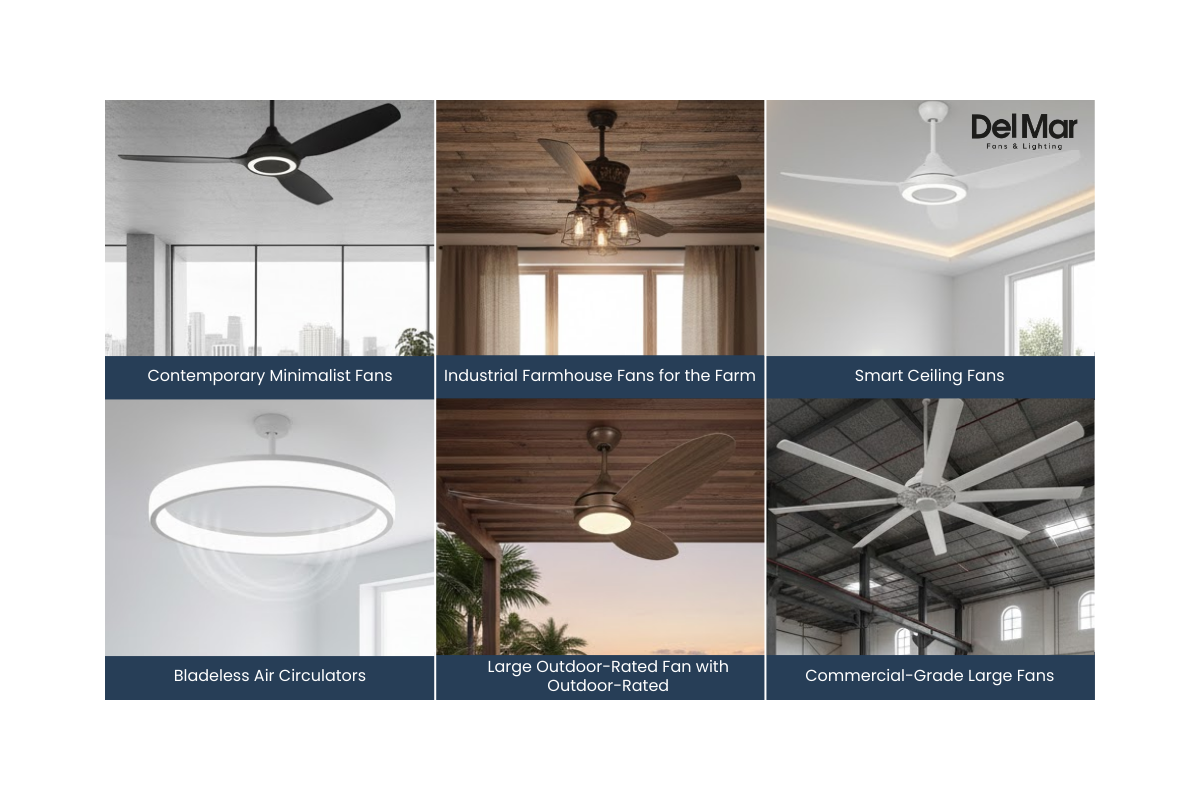
Contemporary Minimalist Fans
Clean lines and sleek designs typically have three or four blades with the matte, black or white. They are a great choice for fans that emphasize subtle elegance and blend seamlessly into contemporary architectural styles.
Industrial Farmhouse Fans for the Farm
Larger models that feature exposed metal blades, exposed hardware and barn-inspired design. They are popular in farmhouse- and rustic-modern homes, these models make big design statements and offer an impressive airflow.
Smart Ceiling Fans
Technology-integrated units controlled via smartphone apps, voice assistants, or home automation systems. These fans can be scheduled as well as speed adjustments and also integration with smart thermostats that optimize energy usage.
Bladeless Air Circulators
Modern designs that don't have traditional blades that use ring-shaped airfoils to provide an airflow that is quiet and powerful. Although technically, they aren't ceiling fans These modern options will appeal to people who want modern, contemporary design.
Large Outdoor-Rated Fan with Outdoor-Rated
Models that are weather-resistant designed for covered porches, patios or outdoor areas. These fans come with moisture-resistant motors with rust-proof finish, as well as UV-protected blades which can resist outdoor elements.
Commercial-Grade Large Fans
The heavy-duty units are designed to operate continuously in commercial environments, with strong motors and sturdy construction. Many homeowners opt for these units to accommodate huge residential spaces that require the highest airflow.
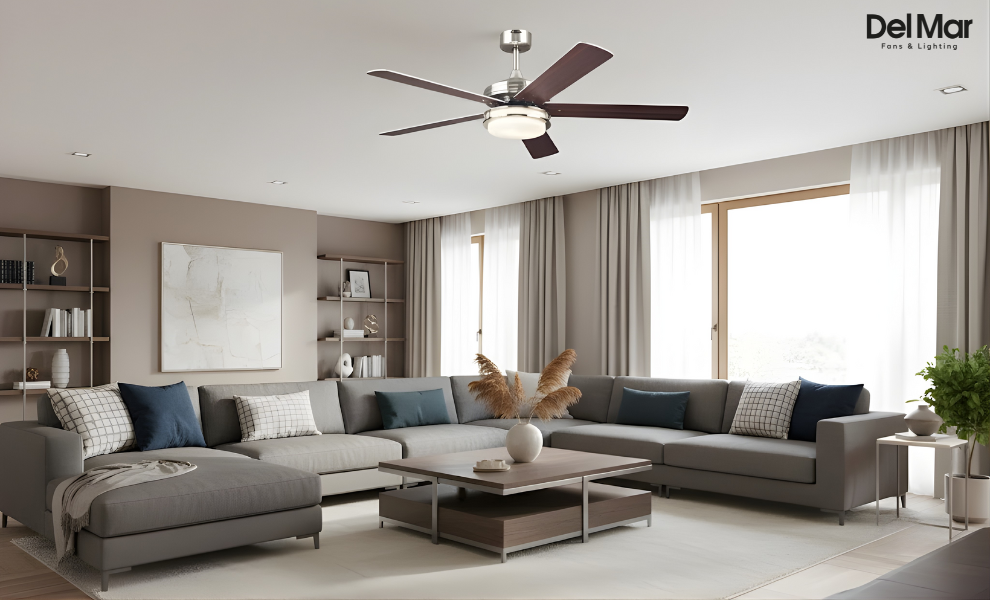
The Most Important Things to Look for
Blade Span and Room Size
- 60-72 in Rooms 400-600 square feet
- 72-84 inches Rooms ranging from 600 to 800 square feet
- + 84 inches Rooms that exceed 800 square feet
- Make sure you measure your room precisely prior to selecting the blade span
- Be aware of furniture placement as well as ceiling height
Model of motor and quality
- DC motors 70 percent less noisy, efficient and more effective, and more options for speed, more cost
- AC motors less expensive, reliable, and suitable for the majority of applications
- Make sure you buy motors that come with a lifetime warranty.
- Make sure you have sealed oil-bath system for lubrication
Capacity of Airflow (CFM)
- Minimum of 5,000 CFM for rooms between 400 and 500 square feet
- 7,700-9,000 CFM for rooms ranging from 600 to 800 square feet
- 10.000+ CFM for fantastic commercial and residential spaces
- Higher CFM does not always mean better, but take into account the noise levels
Material Design for Blades and Materials
- Blades with fewer blades (3-4) generally have more effective airflow than the majority of blades
- Blade pitch of 12-15 degrees is best for air circulation
- Materials: Plywood (durable, quiet), ABS plastic (lightweight), metal (industrial aesthetic)
- Aerodynamic blades minimize noise and increase efficiency.
Ceiling Height Compatibility
- Standard mount (8-9 feet ceilings) The fan hangs 8-12 inches off the ceiling
- Downrod Mount (9+ feet ceilings) adjustable to ensure optimal airflow
- Extended downrods for cathedral or vaulted ceilings
- Blade clearance is recommended to be at least 7-9 feet from the floor for security and effectiveness
Control Options
- Pull chains (basic, reliable, no electrical requirement)
- Wall controls (convenient and multi-speed settings)
- Remote controls (flexible and ideal for homes with high ceilings)
- Smart controls (app-based, voice activation, automation compatible)
Lighting Integration
- LED light kits that are integrated with LEDs help save energy and cut down on the amount of work required to install them.
- The dimmable options let the control of lighting mood
- Separate controls for light and fan allow for flexibility
- Think about the color temperature (2700K warm neutral, 3000K warm 3000K cool, and 4000K+)
Energy Star Certification
- It indicates 20% more performance than standard models.
- Lower operating costs throughout the fans' lifetime
- Green benefits due to reduced energy consumption
- Most often, utility rebates are eligible or incentives
Benefits of a Big Modern Ceiling Fan
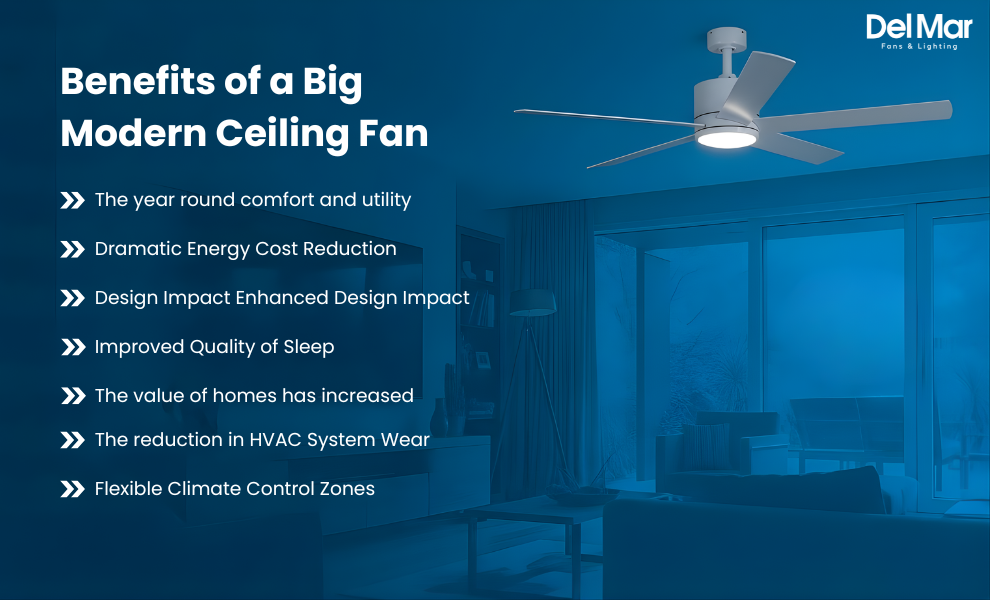
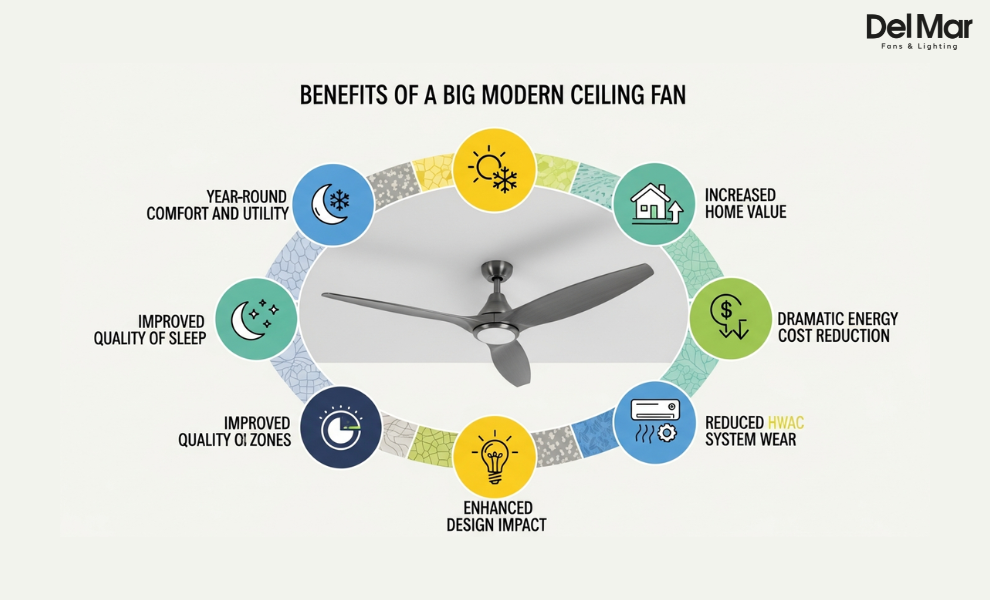
The year-round comfort and utility
It provides cooling relief in summer, and assists in spreading warmth in winter and makes it a year-round comfort solution. This flexibility increases your savings while reducing the need for heating and cooling systems.
Dramatic Energy Cost Reduction
Reduces the cost of air conditioning by 30-40% if used wisely, and pays for itself in a couple of years. The bigger the room, the bigger the chance of saving in comparison to cooling the complete room using HVAC by itself.
Design Impact Enhanced Design Impact
It serves as a focal element that draws attention upwards, thereby making rooms appear bigger and more purposefully created. Contemporary designs complement contemporary interiors and add architectural appeal to plain ceilings.
Improved Quality of Sleep
White noise is created tha blocks out noisy sounds while preserving pleasant temperature throughout the entire night. Regular air circulation helps to prevent stuffiness and decreases sweating in the evening, especially during warm weather.
The value of homes has increased
High-quality ceiling fans are attractive features that attract prospective buyers, especially in warmer climate regions. The installation of a professional in living spaces can increase the perceived worth of your home.
The reduction in HVAC System Wear
In reducing the need for heating and cooling ceiling fans can extend the life span of your HVAC system. This decreases the frequency of maintenance and can delay costly replacements of the system.
Flexible Climate Control Zones
Room-by-room temperature control without having to adjust the whole-house HVAC settings. You can regulate the temperature of areas that are used, but leave unoccupied rooms in less pleasant settings.
Common Use Cases -
Wonderful Rooms and open-concept Living Areas
The vast spaces are typically over 500 square feet and are prone to uneven distribution of temperature. A modern, large ceiling fan with 72plus inch blades will ensure an adequate circulation of air from the kitchen to living room while ensuring the comfort of the entire area without the need to run several smaller ones.
Place the fan in a central position to ensure a balanced airflow. You can also put two fans together in vast open spaces. The continuous air flow stops hot spots near windows and cold zones close to walls on the outside.
Principal Suites, Master Bedrooms as well as Primary Suites
Large bedrooms are able to benefit from soft continuous airflow, which improves sleeping quality, without generating excessive noise. Modern fans equipped with DC motors run at a whisper at low levels, which is ideal for night-time use.
Select fans that have integrated dimmable lighting, to transform overhead fixtures, enhancing the appearance of your bedroom. Remote controls permit easy adjustments while you're in your bed.
Covered Outdoor Living Spaces
Patios, porches and pergolas become pleasurable with the power of air circulation, which reduces humidity and keeps pests away. Outdoor-rated air conditioners can withstand moisture and temperature fluctuations, while creating pleasant outdoor living areas.
Be sure to install properly using approved electrical boxes for outdoor use as well as weatherproof wire. Look into fans with remotes that are weatherproof for easy operation.
Home Offices and Studios
Large spaces for work benefit from constant air circulation that helps to prevent the formation of a stale atmosphere throughout long working hours. Fans emit white noise that helps to improve concentration and maintain pleasant temperatures without the expense of separate HVAC zones.
Pick models with the least amount of noise and wobble to minimize distractions during recording sessions.
Bonus rooms and converted attics
The upper floors are a hotspot and usually lack sufficient HVAC coverage. A strong ceiling fan can help to control temperature extremes and improve the circulation of air in these spaces.
Make sure to account for ceilings that slope with the appropriate angle-corrected mounting hardware. It is possible to extend downrods for optimal blade height.
Pros and Pros
| Advantages | Disadvantages |
|---|---|
| A significant energy savings when compared to air conditioning | A higher initial cost than typical 52-inch fans |
| All-year-round operation with reversible airflow | Requires sufficient ceiling height for safe installation |
| Improves air circulation in large areas | Professional installation may be required due to weight |
| Modern designs enhance contemporary home décor | Effectiveness is limited in very humid climates |
| Peaceful operation thanks to DC motor technology | Potential wobbling if not properly balanced |
| Enhances perceived room comfort by 4–6°F | Requires regular cleaning and maintenance |
| Smart control options available for convenience | Larger blade span can limit furniture placement |
| Environmentally friendly cooling option | Not recommended for ceilings lower than 8 feet |
Big Modern Ceiling Fan vs Air Conditioning
| Factor | Big Modern Ceiling Fan | Air Conditioning |
|---|---|---|
| Energy Consumption | 20–100 watts, depending on speed | 3,000–5,000 watts for central AC |
| Installation Cost | $200–$800, including professional installation | $3,000–$7,000 for a central system |
| Operating Cost | $5–$15 per year for continuous use | $200–$600+ per cooling season |
| Cooling Method | Wind chill effect (perceived cooling) | Actual temperature reduction |
| Humidity Control | Improves air circulation, minimal dehumidification | Actively removes moisture from the air |
| Temperature Range | Effective from 65°F to 95°F | Effective even in extreme temperatures |
| Noise Level | 25–45 decibels (whisper to quiet conversation) | 40–60 decibels (moderate to noticeable) |
| Maintenance | Annual cleaning, periodic blade balancing | Professional service recommended yearly |
| Environmental Impact | Minimal carbon footprint | Higher energy use, refrigerant concerns |
| Best Use Case | Occupied rooms, supplemental cooling | Whole-home cooling in extreme heat |
Common Purchase Mistakes
Selecting Style over Performance
Many buyers focus on appearance without confirming CFM ratings or the quality of the motor. A stunning fan that circulates not enough air to suit your room dimensions will not be a good choice regardless of appearance. Be sure to check that the airflow specifications are compatible with the requirements of your room.
Incorrect Size Selection
Installing a 60-inch air conditioner in a 700-square-foot space results in a lack of circulation and a waste of money. Make sure you measure your room precisely and follow the manufacturer's guidelines for sizing instead of relying on your appearance.
Ignoring Ceiling Height Requirements
Fans that are near the ceiling, or far away from the floor will be less efficient and can cause safety risks. Standard installations should position blades 8-9 feet off the floor and 10-12 inches away from the ceiling for maximum performance.
Overlooking Motor Type
AC motors are less expensive initially, but use significantly more energy over their life. If large fans are running continuously they will save energy. DC motors generally justify the higher cost within 3 to 5 years.

Doing the wrong thing by not allowing professional installation
The large ceiling fan weighs between 30 and 60 pounds and needs secure mounting to ceiling joists, or approved support structures. Installation by yourself without a professional could result in hazardous wobbling, noise or a catastrophic failure.
Neglecting Lighting Needs
Installing a fan with no integrated lighting in a room that does not have alternatives to ceiling fixtures will result in insufficient lighting. Take into consideration your lighting requirements prior to making a decision between fan-only models or integrated lighting kits.
Disregarding Control Preferences
Wall controls require modifications to electrical wiring and pull chains are difficult to use with high ceilings. Find the control you prefer prior to purchase in order to prevent installation issues or frustration.
Then forgetting about Dimmer Switch Compatibility
Standard dimmers can harm motors for fans and invalidate warranties. If you're looking for the ability to control speed in a variable manner, ensure that you install suitable speed controls with a fan rating instead of repurposing existing lighting dimmers.
Maintenance and Care Tips for Maintenance and Care
Regular Blade Cleaning
Dust builds up on the fan blades, causing the weight, which causes instability and wobbling. Clean your blades regularly using a microfiber cloth or an extendable duster. Wipe both sides to keep them in good condition.
Annual Deep Cleaning
Every year, shut off power and then remove the blades to clean them thoroughly with water and mild soap. This helps prevent buildup, which reduces efficiency, and also allows for inspection of cracks or damage that requires replacement.
Motor Housing Maintenance
Clean the motor's housing and canopy every couple of months to avoid dust build-up that could affect the dissipation of heat. Use a damp cloth, and be careful not to get water inside electronic components.
Blade Balance Checks
If you feel that your blade is wobbling, utilize a balancing tool (usually provided with quality fans) to pinpoint and fix the blade that is imbalanced. Small weights with adhesive attach to the blade's tops, stopping wobbles without professional assistance.
Hardware Tightening
Vibration slowly loosens screws and connections. Every 6-12 months, be sure to tighten the blade brackets and downrod connectors as well as the canopy screw when power is cut off.
Bulb Replacement Light Bulb Replacing
Use only manufacturer-recommended bulb types and wattages to prevent overheating. Led bulbs are more durable and produce less heat, thus extending the life of your fixture while decreasing the amount of energy consumed.
Seasonal Directional Changes
Reverse fan direction when seasons change--counterclockwise for summer downdraft, clockwise for winter updraft. This simple switch can increase efficiency and comfort all through the year.
Professional Inspection
Every 3 to 5 years, have an experienced electrician examine connections to electrical circuits for mounting security, as well as overall performance. This preventive method helps identify the potential for problems before they can cause problems or create safety hazards.
The most important takeaways
- Big Modern Ceiling Fan are big and powerful, working best in rooms larger than 400 square feet. They have blades that span 60-96 inches, allowing for adequate air circulation
- DC motors are more efficient in energy efficiency, more quiet operation, and a wider range of speed options than conventional AC motors
- The proper sizing is crucial. Match your blade's span as well as CFM measurement to particular space dimensions to ensure optimal performance
- These fans offer year-round benefits by cooling summer temperatures and winter heat distribution, when the direction of travel is reversed.
- Installation requires the secure attachment of ceiling joists, or to approved support structures due to the substantial weight
- Energy savings usually offset more expensive purchase costs in a matter of years when compared with air conditioning dependence
- Contemporary designs are a great complement to contemporary interiors while also serving as practical architectural points of interest
- Regular maintenance that includes cleaning of blades check balance, blade cleaning, and tightening of the hardware will ensure longevity of performance
- Lighting control options and smart control integration increase convenience and enhance capabilities
- A professional installation is recommended to ensure security and to ensure correct wiring and electrical connection.
Conclusion
A modern, large-sized ceiling fan can transform the way you feel comfortable in the largest rooms of your home. If you know the relation between the size of your room and blade span as well as motor efficiency and airflow capacity, you are able to choose a fan that offers aesthetic appeal as well as practical performance.
A high-quality large ceiling fan will pay dividends with reduced energy costs as well as improved air circulation and improved interior design. When you're designing a stunning space, master suite or outdoor living space fitting the appropriate specifications for your fan ensures comfort all year long while promoting sustainable development of the environment.
Be sure to take accurate measurements of your space, look up motor types as well as CFM scores, as well as then consider what options to control your needs. If you choose the right one and install it correctly your Big Modern Ceiling Fan will give you many years of reliable service being one of the most intelligent home improvements you could make.
Frequently Answered Questions
What size of modern ceiling fan do I require for a room 20x20?
A 20x20 room (400 square feet) requires the use of a ceiling fan that has a 60-72" blade width. To ensure maximum comfort, choose the model that has at least 5,000 to 6,000 CFM airflow. If your ceiling exceeds 9 feet, consider a 72-inch model for better air distribution.
Can I put in an enormous ceiling fan on a ceiling that is sloped?
Yes, most Big Modern Ceiling Fan can be installed on ceilings that are sloped by using angle-swiveling mounting kits or canopy that are designed to accommodate pitches of up to 45 degrees. Make sure you buy the right installation hardware to match your ceiling angle and ensure that the fan's rating is appropriate for use on sloped ceilings.
What does it cost to run a Big Modern Ceiling Fan?
A 75-watt ceiling fan that runs 24 hours a day will cost you between $8 and $12 annually based on an average US electricity prices. DC motors consume less energy, and could cost just $5-$7 per year, which makes them extremely affordable compared to air cooling.
Do ceiling fans with large diameters consume more power than smaller ones?
Not necessarily. While bigger fans could have larger motors, the latest DC motor technology can make larger fans more energy efficient for each square foot of cooling than running a number of smaller ones. One 72 inch DC fan generally consumes less energy that two 52 inch AC fans that cover similar areas.
What is the difference between CFM and RPM?
RPM (revolutions per minute) is a measure of how fast blades spin and CFM (cubic feet per minute) determines the actual amount of air that is moved. CFM is a reliable performance metric: a fan could spin extremely fast (high RPM) however it will only move very little air even if the blades are not properly made.
Do I need an air conditioner with more blades to improve circulation of air?
Not necessarily. A few or four aerodynamically designed blades typically outperform five or more conventional blades. Blade pitch, motor power and overall design are more important than the number of blades. A smaller number of blades can also lessen the strain on motors and reduce noise.
What can a ceiling fan do to cool a room even without air cooling?
Ceiling fans don't reduce the actual temperature of the room, they generate a wind-chill effect which can make you feel about 4-6 degrees cooler. In mild climates or in warm weather, this perception of cooling effect can reduce the requirement for air conditioning altogether.
What is the recommended frequency to change my fan in the ceiling?
Quality ceiling fans last for 15-20 years if they are maintained with regular maintenance. In contrast, switching to the latest DC motors can result in substantial energy savings, which justify replacing after 10-12 years even if your current fan continues to function as it should.
