


At first glance, indoor and outdoor ceiling fans can appear almost identical. Many share the same blade shapes, integrated lighting, and even similar finishes. That's why homeowners are often surprised to learn that where a fan is installed matters just as much as how it looks.
A ceiling fan designed for a bedroom or living room isn't automatically suited for a covered patio or screened porch. Exposure to humidity, condensation, and changing weather conditions introduces challenges that indoor fans simply weren't engineered to handle. Choosing the wrong fan may not cause immediate failure, but over time it can lead to warped blades, corrosion, finish deterioration, and reduced motor life.
Understanding the difference between indoor and outdoor ceiling fans isn't about limiting your options. It's about matching the fan to the environment so it can provide years of reliable comfort without unnecessary maintenance or premature replacement.
Can You Use an Indoor Ceiling Fan Outside?
No.
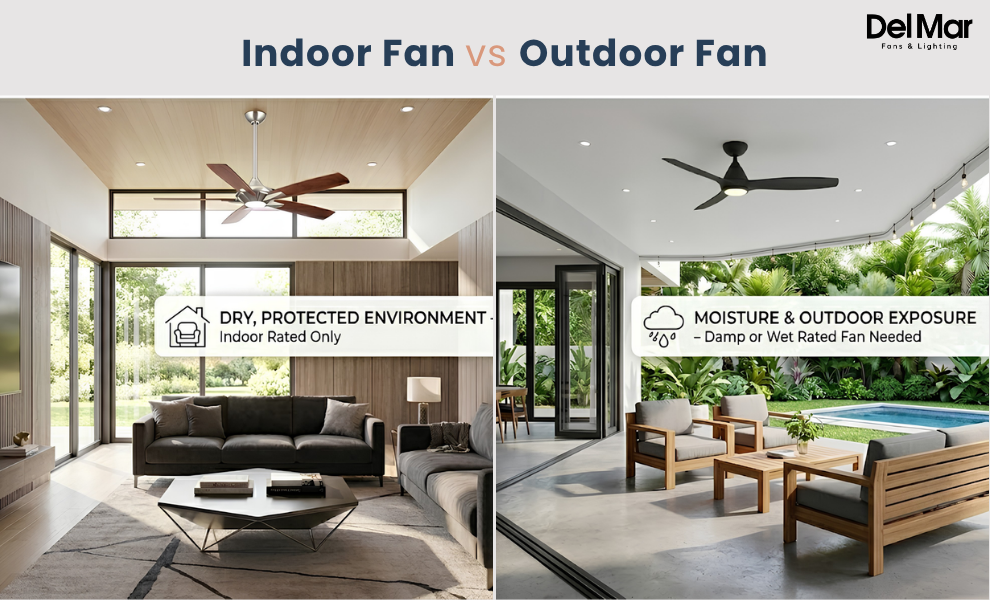
Although some indoor and outdoor fans may look nearly identical, they are built differently. Indoor ceiling fans are designed for protected environments where humidity and moisture remain relatively low. Once installed outdoors—even beneath a covered roof—they are exposed to conditions that can gradually damage finishes and internal components.
Humidity alone can affect wood blades and metal surfaces. Over time, prolonged exposure to changing outdoor conditions may shorten the life of the motor, compromise finishes, and potentially void manufacturer warranties.
Covered patios often create the biggest misunderstanding. Homeowners assume that because a space has a roof, any fan will work. In reality, moisture levels beneath covered porches and lanais are often much higher than those inside the home, making outdoor-rated fans the safer long-term choice.
Expert Note
The question isn't whether an indoor fan will survive outdoors for a few months. The real question is whether it will continue performing reliably five years from now. Environmental exposure tends to cause gradual deterioration rather than immediate failure.
What is an Indoor Ceiling Fan?
Indoor ceiling fans are designed for the controlled conditions found inside the home. Bedrooms, living rooms, dining rooms, offices, media rooms, and finished basements all fall into this category.
Because these spaces are protected from excess moisture, manufacturers can prioritize decorative finishes, furniture-quality materials, and design flexibility rather than weather resistance. Solid wood blades, specialty finishes, and intricate detailing are more common because the components aren't expected to withstand constant humidity or rain exposure.
That doesn't mean indoor fans are less durable. They're simply optimized for different conditions. Many premium indoor fans now include DC motors, integrated LED lighting, reversible operation, and smart controls. However, those features alone do not make a fan suitable for outdoor use.
Typical Locations
- Bedrooms
- Living rooms
- Dining rooms
- Home offices
- Media rooms
- Finished basements
Industry Insight
One of the most common misconceptions is that premium construction automatically means weather resistance. A beautifully crafted indoor fan may include advanced controls and exceptional materials, but unless it is specifically designed for outdoor conditions, it belongs indoors.
What is an Outdoor Ceiling Fan?
Outdoor ceiling fans are built for environments that experience higher humidity and changing weather conditions than interior rooms. Corrosion-resistant finishes, sealed components, and weather-tolerant blade materials help them withstand conditions that would gradually damage a typical indoor fan.
These differences aren't always obvious from appearance alone. In fact, many outdoor fans look nearly identical to their indoor counterparts. The protection lies in the engineering rather than the styling.
Outdoor ceiling fans are commonly used in:
- Covered patios
- Screened porches
- Lanais
- Outdoor kitchens
- Pergolas
- Gazebos
- Covered decks
Modern outdoor fans have evolved significantly in recent years. Features once reserved for interior spaces—including smart controls, integrated LED lighting, DC motors, voice compatibility, and quiet operation—are now widely available in outdoor-rated designs.
Homeowners no longer have to choose between performance and durability. The best outdoor ceiling fans deliver both.
Expert Tip
Think of an outdoor ceiling fan the same way you would outdoor furniture. A sofa designed for a living room may look beautiful on a patio, but prolonged exposure to humidity and weather will eventually take its toll. Ceiling fans follow the same principle.
Understanding Dry, Damp, and Wet Rated Ceiling Fans

By this point, the difference between indoor and outdoor fans becomes less about style and more about environmental protection. That's where location ratings come into play.
These classifications determine how much moisture a fan can safely handle and often have a greater impact on long-term reliability than the motor or finish itself.
Dry Rated Ceiling Fans
Dry-rated ceiling fans are intended exclusively for interior spaces where they remain protected from humidity and moisture.
Suitable Locations:
- Bedrooms
- Living rooms
- Dining rooms
- Home offices
- Media rooms
Damp Rated Ceiling Fans
Damp-rated fans are designed for covered outdoor areas where moisture is present but direct rain is not.
Suitable Locations:
- Covered patios
- Screened porches
- Sunrooms
- Outdoor kitchens
- Lanais
- Covered decks
Wet Rated Ceiling Fans
Wet-rated ceiling fans offer the highest level of protection and are engineered to withstand direct rain and continuous outdoor exposure.
Suitable Locations:
- Pergolas
- Gazebos
- Open patios
- Uncovered decks
- Exposed outdoor seating areas
Industry Insight
Location ratings are engineering standards rather than marketing labels. Selecting the proper rating is one of the most important factors in maximizing the lifespan and reliability of a ceiling fan.
Indoor vs Outdoor Ceiling Fan Comparison Table
| Feature | Indoor Ceiling Fan | Outdoor Ceiling Fan |
|---|---|---|
| Typical Rating | Dry Rated | Damp Rated or Wet Rated |
| Moisture Resistance | Minimal | High |
| Corrosion Protection | Limited | Enhanced |
| Suitable Locations | Bedrooms, Living Rooms, Offices | Patios, Porches, Pergolas |
| Blade Materials | Wood, MDF | ABS, Composite, Weather-Resistant Materials |
| Motor Protection | Standard | Sealed Components |
| Humidity Exposure | Low | Moderate to High |
| Longevity Outdoors | Poor | Excellent |
| Finish Protection | Decorative | Corrosion-Resistant |
| Direct Rain Exposure | No | Wet-Rated Models Only |
Expert Note
The difference between indoor and outdoor fans isn't always visible. Much of the protection is built into the finishes, blade materials, motor housing, and internal components rather than the overall appearance.
Covered Patio vs Screened Porch vs Pergola: Which Rating Do You Need?

Not every outdoor space experiences moisture in the same way. The amount of protection provided by walls, roofing, and screens plays a significant role in determining which ceiling fan rating is appropriate.
Covered Patio
A covered patio has a roof overhead but remains exposed to humidity and occasional wind-driven moisture. In most situations, a damp-rated fan is appropriate.
Screened Porch
Screened porches offer additional protection while still allowing airflow and humidity to enter. Damp-rated fans are generally the recommended choice.
Sunrooms and Lanais
Although enclosed, these spaces often experience elevated temperatures and humidity. Damp-rated fans perform well in these environments.
Pergolas
Pergolas provide limited overhead coverage and allow rain and weather to reach the fan. Wet-rated models are the safer long-term option.
Gazebos and Open Patios
Completely exposed outdoor areas require wet-rated ceiling fans that can withstand direct moisture.
Expert Tip
When in doubt, choosing a wet-rated fan rarely hurts. Choosing a fan with too little protection, however, can significantly shorten its lifespan.
What Happens If You Use an Indoor Ceiling Fan Outside?

Installing an indoor ceiling fan outdoors may seem harmless, especially beneath a covered patio or screened porch. After all, the fan isn't directly exposed to rain, and many indoor and outdoor models look nearly identical. Unfortunately, appearance can be misleading.
The biggest issue isn't a sudden failure. Instead, damage tends to happen gradually. Moisture in the air, temperature fluctuations, and prolonged humidity slowly begin affecting components that were never designed to withstand those conditions. The result is often reduced performance, cosmetic deterioration, and a shorter lifespan.
Wood blades may begin to warp or crack as they repeatedly absorb and release moisture. Decorative finishes can show signs of corrosion, particularly in humid or coastal climates. Even if the motor continues to function, internal components may deteriorate faster than expected, eventually leading to increased noise, vibration, or premature replacement.
Another consideration is warranty coverage. Most manufacturers specify where a fan can and cannot be installed. Using a dry-rated indoor fan outdoors may void warranty protection, leaving homeowners responsible for repairs or replacement.
Industry Insight
Many homeowners assume that "covered" automatically means "protected." In reality, covered patios and screened porches still experience significant humidity and moisture exposure. The damage caused by the wrong fan often develops slowly enough that the connection isn't obvious until years later.
5 Common Mistakes Homeowners Make When Choosing Outdoor Ceiling Fans
Even experienced homeowners occasionally misunderstand outdoor ceiling fan requirements. Most mistakes aren't caused by poor products, but by assumptions about how much protection an outdoor environment actually provides.
1. Assuming a Covered Patio Doesn't Need an Outdoor Fan
This is easily the most common mistake. A roof may block rain, but it doesn't eliminate humidity, condensation, or wind-driven moisture. Covered patios and screened porches almost always require damp-rated fans.
2. Focusing Only on Style
A beautiful finish or designer blade shape means little if the fan isn't engineered for the environment. Performance, rating, and durability should always come before aesthetics.
3. Ignoring Blade Materials
Natural wood blades often perform beautifully indoors, but outdoor environments typically benefit from composite or weather-resistant materials that are less susceptible to moisture.
4. Underestimating Coastal Conditions
Salt air introduces an additional challenge that standard outdoor fans may not be equipped to handle. Homes near the ocean often require corrosion-resistant finishes and, in some cases, marine-grade components.
5. Choosing a Rating That's Too Conservative
Homeowners sometimes worry that wet-rated fans will look overly industrial. Fortunately, today's wet-rated models are available in styles ranging from transitional to contemporary, making it possible to prioritize protection without sacrificing design.
Expert Tip
When uncertain between damp-rated and wet-rated, it's usually better to choose the higher level of protection. Extra weather resistance rarely creates problems, but insufficient protection often shortens the life of the fan.
What Features Should You Look for in an Outdoor Ceiling Fan?

Not all outdoor ceiling fans are created equal. Beyond location ratings, several features can improve comfort, efficiency, and long-term usability.
1. DC Motors
DC motors have become increasingly popular because they provide excellent airflow while using less energy. They also tend to operate more quietly and offer additional speed settings compared to traditional AC motors.
2. Reversible Operation
A reversible motor allows homeowners to use the fan throughout the year. During summer, it creates a cooling breeze, while winter operation helps redistribute warm air and improve comfort.
3. Smart Controls
Many premium outdoor fans now include Wi-Fi connectivity, app controls, and compatibility with Amazon Alexa or Google Home. These features make it easier to schedule operation and adjust settings without relying solely on a handheld remote.
4. Integrated LED Lighting
An integrated LED light can eliminate the need for additional overhead fixtures and reduce energy consumption compared to traditional bulbs.
5. Blade Materials
Outdoor environments place additional stress on blades. ABS, composite, and all-weather materials offer greater resistance to moisture and help maintain their shape over time.
6. Installation Flexibility
Sloped ceilings, vaulted patios, and varying ceiling heights often require adaptable mounting options. Fans that accommodate angled ceilings provide more flexibility during installation.
Expert Note
While features like smart controls and integrated lighting are convenient, location rating should always come first. A highly advanced indoor fan is still the wrong choice if it isn't engineered for outdoor conditions.
Consider Coastal Conditions If You Live Near the Ocean
For most homeowners, a standard damp-rated or wet-rated ceiling fan provides more than enough protection. However, coastal environments introduce another challenge that has little to do with rain and everything to do with salt.
Salt-laden air can accelerate corrosion, even in covered outdoor spaces. Homeowners living along the Florida coast, Gulf Coast, or other oceanfront regions often need to think beyond standard outdoor ratings and pay closer attention to corrosion resistance. In these environments, certain manufacturers offer coastal-grade finishes designed to withstand salt air, while marine-grade fixtures provide the highest level of protection for areas exposed to harsher waterfront conditions.
Industry Insight
Moisture ratings and corrosion resistance are not the same thing. A fan may be wet rated and still not be the ideal choice for a beachfront property. Salt exposure introduces a separate set of challenges that often require specialized materials and finishes.
For homeowners planning outdoor living spaces near the coast, understanding the differences between coastal-grade and marine-grade fixtures can help prevent premature corrosion and extend the life of the installation.
Do Outdoor Ceiling Fans Use More Electricity?
Not necessarily.
A fan's energy consumption depends far more on the motor and lighting technology than on whether it is installed indoors or outdoors. A modern outdoor fan with a DC motor and integrated LED light may actually use less electricity than an older indoor model.
Motor efficiency plays the biggest role. DC motors are known for delivering strong airflow with lower energy consumption, while integrated LED lights further reduce overall operating costs. Smart controls can also contribute by allowing homeowners to automate schedules and avoid running the fan unnecessarily.
Industry Insight
Homeowners sometimes assume outdoor fans require more power because they operate in larger spaces. In reality, energy use depends on the design of the fan itself, not its location. Two similarly sized fans with the same motor technology will generally consume comparable amounts of electricity regardless of where they are installed.
Best Indoor Ceiling Fans
The best indoor ceiling fans aren't necessarily the most expensive or the most technologically advanced. Instead, they strike a balance between airflow, efficiency, convenience, and design suitability. These two models stand out for homeowners who want reliable comfort without compromising on features.
Minka Aire Light Wave Ceiling Fan

Homeowners looking for a fan that blends contemporary design with smart functionality will find plenty to appreciate in the Minka Aire Light Wave ceiling fan. Its distinctive three-blade profile gives it a clean appearance, but the real appeal lies in its everyday usability.
The energy-efficient DC motor delivers quiet operation and multiple speed settings, making it particularly well suited for bedrooms, living rooms, and home offices where noise levels matter. An integrated LED light provides additional functionality without requiring a separate overhead fixture, while the included remote control simplifies day-to-day operation.
For homeowners invested in connected living, the Light Wave offers compatibility with Bond technology, allowing integration with Amazon Alexa and Google Home. Combined with reversible operation and sloped ceiling adaptability, it provides the versatility expected from a premium indoor ceiling fan.
Hunter Aerodyne Ceiling Fan

The Hunter Aerodyne ceiling fan brings together energy efficiency and smart convenience in a package that remains approachable for everyday homeowners. Its contemporary design works comfortably across a variety of interiors, while the Wi-Fi-enabled controls add a level of flexibility that many homeowners increasingly expect.
Through the Hunter app, Amazon Alexa, or Google Assistant, users can control fan speeds and lighting without relying exclusively on the included remote. The integrated LED light and reversible motor enhance year-round usability, while the energy-efficient design helps maintain comfort without excessive energy consumption.
For homeowners interested in entering the smart home ecosystem without overwhelming complexity, the Aerodyne offers a practical combination of technology and everyday performance.
Best Ceiling Fans for Covered Patios
Covered patios occupy a middle ground between indoor spaces and fully exposed outdoor environments. Although protected from direct rain, they still experience humidity and changing weather conditions that require damp-rated construction.
Modern Fan Company Stella Ceiling Fan

The Modern Fan Company Stella ceiling fan demonstrates that outdoor durability doesn't have to come at the expense of style. Its clean profile and integrated LED lighting make it suitable for covered patios, screened porches, and outdoor kitchens where homeowners want a refined appearance without sacrificing reliability.
A damp rating allows the Stella to handle humidity and moisture that would gradually damage a standard indoor fan. Its energy-efficient design and quiet operation make it equally comfortable in indoor spaces, providing flexibility for homeowners who want consistency throughout the home.
WAC Hug Ceiling Fan

Low ceilings are common in covered patios and porches, which makes the WAC Hug ceiling fan particularly appealing. Its flush-mount profile keeps the fan close to the ceiling while still providing effective airflow.
The integrated LED light adds functionality, and the energy-efficient DC motor helps reduce operating costs. Smart controls and app compatibility further enhance convenience, allowing homeowners to adjust comfort settings from virtually anywhere.
Modern Forms Skylark Ceiling Fan

Few outdoor fans combine smart technology and versatility as effectively as the Modern Forms Skylark ceiling fan. Designed for damp locations, it performs exceptionally well on covered patios, screened porches, and outdoor entertaining spaces.
Its quiet DC motor delivers impressive airflow, while integrated LED lighting and app-based controls create a seamless user experience. Compatibility with Amazon Alexa and Google Home adds another layer of convenience, making the Skylark an excellent fit for connected homes.
Best Ceiling Fans for Open Outdoor Spaces
Open patios, pergolas, and gazebos demand the highest level of protection. Wet-rated fans are specifically engineered to withstand direct exposure to rain and changing weather conditions.
Hinkley Hover Flush Mounted Ceiling Fan
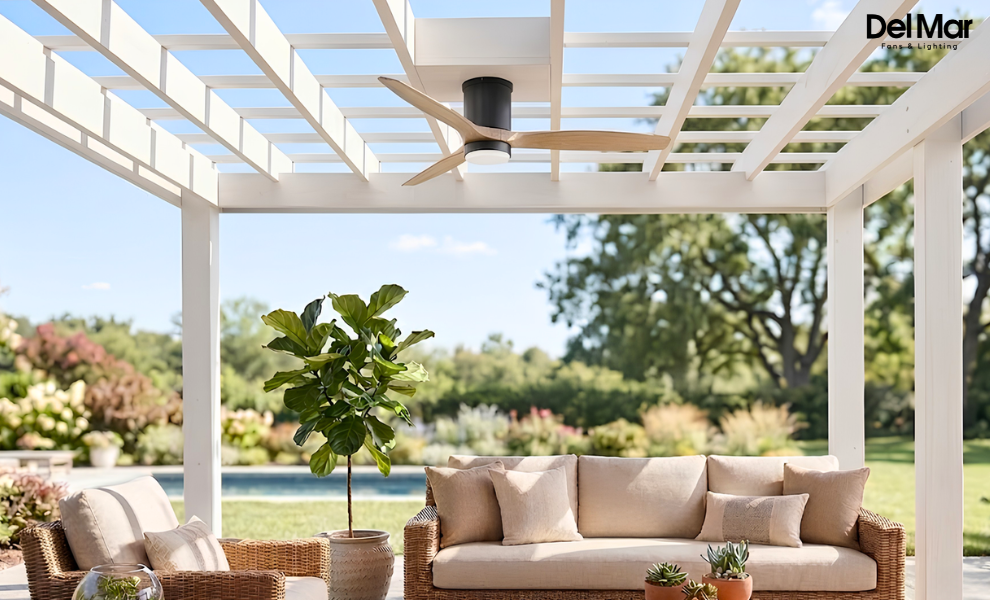
The Hinkley Hover flush mount ceiling fan offers a practical solution for outdoor spaces where ceiling height is limited. Its low-profile design makes it especially useful beneath pergolas and covered areas where maintaining headroom is important.
An integrated LED light and energy-efficient operation enhance everyday usability, while the wet rating ensures reliable performance in challenging conditions.
Matthews Alessandra Ceiling Fan

The Matthews Alessandra ceiling fan brings together designer aesthetics and serious outdoor performance. Its sculptural profile provides strong airflow while maintaining a refined appearance that works beautifully in upscale outdoor living spaces.
With wet-location approval and premium construction, the Alessandra offers homeowners the confidence to install a statement fan in environments exposed to direct weather.
Minka Aire Simple Ceiling Fan

The Minka Aire Simple outdoor ceiling fan remains one of the most versatile fans available. Its wet-location rating allows it to perform in demanding outdoor environments, while Bond compatibility and support for Amazon Alexa and Google Home make it one of the smartest options in this group.
Combined with quiet DC motor operation, remote control, and reversible airflow, the Simple offers a compelling blend of efficiency, convenience, and all-weather versatility.
Conclusion
Indoor and outdoor ceiling fans may share similar styling, but they are engineered with very different environments in mind. Choosing the right fan isn't simply about finding the most attractive design or the most advanced controls. It's about matching the fixture to the conditions it will face every day.
For interior spaces, an indoor fan offers endless design possibilities and modern conveniences. Outdoor environments, however, demand additional protection against humidity and weather exposure. That's why understanding dry, damp, and wet ratings is so important. Those classifications often have a greater impact on long-term performance than the motor, finish, or number of blades.
Fortunately, today's homeowners no longer have to compromise. Whether you're furnishing a bedroom, refreshing a screened porch, or completing an outdoor kitchen, there are ceiling fans designed specifically for those environments. Selecting the right rating from the beginning helps ensure years of dependable comfort, quieter operation, and fewer surprises down the road.
Final Expert Tip
When uncertainty exists, always choose the fan based on the environment rather than the appearance. Styles change over time, but the right rating and proper construction will continue delivering comfort long after trends have come and gone.
Queries Answered
Q. Can I use an indoor ceiling fan on a covered patio?
A. Generally, no. Even covered patios experience elevated humidity and moisture levels that indoor ceiling fans are not designed to handle. A damp-rated fan is usually the safer long-term choice.
Q. What is a damp-rated ceiling fan?
A. A damp-rated ceiling fan is engineered for areas exposed to humidity and condensation but protected from direct rain. Covered patios, screened porches, outdoor kitchens, and sunrooms are common examples.
Q. Do I need a wet-rated fan for a covered patio?
A. Not necessarily. Most covered patios only require a damp-rated fan. However, if the area is exposed to wind-driven rain or lacks significant overhead protection, a wet-rated model may provide additional peace of mind.
Q. What happens if an indoor ceiling fan gets wet?
A. Moisture exposure can cause blade warping, corrosion, finish deterioration, and premature motor wear. It may also void the manufacturer's warranty.
Q. Are outdoor ceiling fans less energy efficient?
A. No. Energy efficiency depends more on the motor and lighting technology than on the installation location. Many outdoor fans with DC motors and integrated LEDs are just as efficient as indoor models.
Q. Can outdoor ceiling fans be installed indoors?
A. Yes. Outdoor-rated fans can be installed indoors without issue. In fact, many homeowners choose them for laundry rooms, sunrooms, and other areas with elevated humidity.
