You would be surprised to know that the average homeowner spends about $2,000 a year on energy bills. The bulk of that comes directly from the heating and cooling of your home. Adjusting a handful of factors, such as choosing the right lighting solutions, will save your wallet and help the environment in the best possible way. There are many other ways to save yourself from paying hefty energy bills. In this blog, we have come up with energy-efficient heating and cooling tips for summer, winter, and any other time of the year to help you save on power bills. So, without further ado, let’s get started.
Tips to Keep Your Home Cool in the Summer & Save on Energy Bills
Are you looking for ways to beat the summer heat without paying extra bills or harming the environment? If yes, then we have got your back. We have a great list of summer energy-efficient cooling tips for you. We have compiled them in order ranging from easy-peasy to serious-lifting.


1. Lower your AC
A good rule of thumb when using your AC in the summer is to try to keep it at 78 degrees Fahrenheit when you are home and 85 degrees Fahrenheit when you leave your home. Do not turn the unit completely off unless you’re leaving for more than 24 hours. This way you can reduce your utility costs by 1 to 3 percent for every degree higher you set it. Consider using this tactic with energy-saving ceiling fans to keep your space cool.
2. Air Circulation is a Must
One main reason your home begins to heat up is the lack of air circulation. Opening the windows and doors in the early mornings or evenings, when the temperature is still low outside, will allow cool air to move through, letting your home cool itself naturally before the summer heat kicks in. Pair this technique with high-airflow ceiling fans, you will not even need your AC on during the first part of the day.
3. Install Right Lighting Solutions
Our blog titled: Comparing Energy Savings: LED, CFL, & Halogen Light Bulbs outlines the different types of light bulbs and differences between them. However, in this section, we are highlighting the need and importance of switching from old incandescent or halogen bulbs to energy-saving LED light bulbs( Light Emitting Diodes).
You would be amazed to know that LEDs use up to 90% less energy and last up to 25 times longer than traditional incandescent bulbs. Thus, you can save a lot on energy bills. Further, LEDs do not emit heat like other bulbs. This will help keep your home a few degrees cooler overall.
Another way to keep your home cool is to replace some of the light fixtures in a room with a ceiling fan with lights. Doing so will keep your space cool while providing ample lighting for a room.
4. Block the Sun
If your home gets direct exposure to sunlight, it can significantly increase the temperature inside, leading to discomfort and higher energy costs as your air conditioning works harder to cool the space. To avoid this, prevent that heat from entering your home. Several effective ways to achieve this include sun-blocking curtains, solar screens, window tinting, or shutters.
5. Use your Green Thumb
Did you know that carefully positioned trees can save up to 25% of the energy a typical household uses? Yes, you read that right! Find the areas of your home that get the most sun exposure in the summertime and plant your favorite types of plants there. This is not an instant fix, but in a few years, shady trees could help save you big on your home cooling costs and keep your space cool during the beaming summer days.
6. Install DC Motor Ceiling Fans
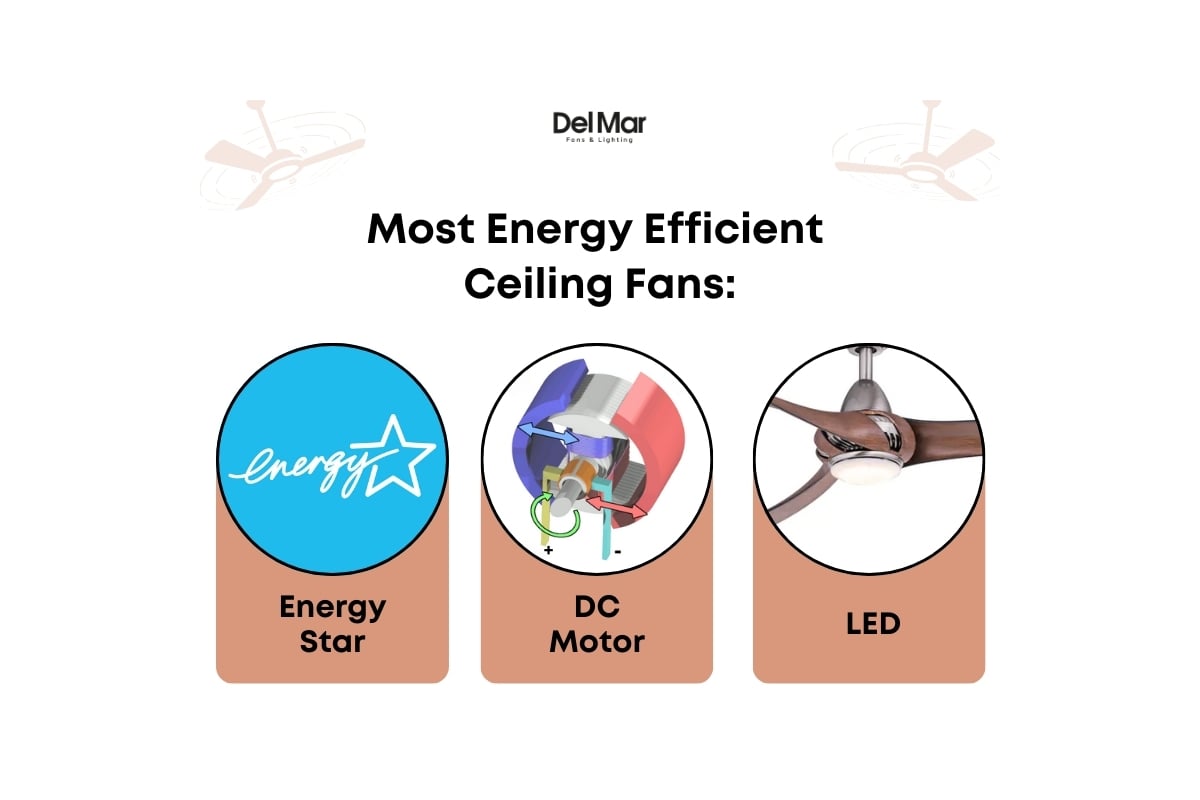
DC motor ceiling fans are an energy-efficient choice to keep your home cool during the summer. Unlike traditional fans with AC motors, DC motor fans use up to 70% less energy, helping you save on electricity bills. They provide powerful airflow with quieter operation, making them ideal for both residential and commercial spaces. By choosing a DC motor ceiling fan, you can maintain a comfortable indoor environment while reducing energy consumption. For more information on energy-efficient ceiling fans, read our blog: Most Energy Efficient Ceiling Fans: Energy Star, DC Motor, LED & More.
7. Consider Portable Fans
If installing a ceiling fan in your home is not an option for you, consider buying portable desk fans or floor fans. No major installation is necessary and these fans can move from room to room while still saving high on cooling costs. As a bonus, many of these fans are extremely stylish.
8. Choosing the Right AC
This is a big one and we know many homes do not get a choice in the matter, but if you do get to choose your AC unit we recommend picking an Energy Star-rated product with a higher Seasonal Energy Efficiency Ratio (SEER). The higher the SEER the better the AC will be at saving energy.
Tips to Save Energy in Winter
Don't let the winter chill stop you from saving energy. We've got you covered during the colder months as well. Here are some of our best tips to help you keep your energy usage in check throughout the winter season.


1. Turn your Heater Down
As per Energy Saver,” Setting the thermostat to around 68°F to 70°F while you're awake and setting it lower while you're asleep or away from home can easily help you save energy in the winter.” Try to only use your heater when the temperature drops below 50 degrees outside. You can save 1 to 3 percent on your electric bill for every degree lower you go on the thermostat.
2. Reverse your Ceiling Fan
Ceiling fans do not just cool your home. Most have a built-in switch that allows you to turn your fan clockwise in the winter months. Read our How to Reverse Your Ceiling Fan article. When your fan is running clockwise it pushes all the warmer air, which naturally rises to the ceiling and back down to the floor.
3. Light a Fireplace
If you're fortunate enough to have a fireplace or the option to add a fireplace extension to your home, make the most of it. Using your fireplace not only adds a soothing ambiance and pleasant aroma to your home, but it can also significantly reduce your heating costs while conserving non-renewable resources.
4. Replace or Clean your Filters
Replace or clean the filters of your furnace or other heating units. This will allow your unit to work a little easier to push the heat out into your home. This will also save you between 5 to 10 percent on your heating costs.
5. Let Natural Light Enter your Space
Optimize your home for natural heating during the winter. Remove any solar panels or sun-blocking curtains you used during the summer to allow maximum sunlight to enter your home. Windows that receive heavy sunlight can be a fantastic asset in heating your home naturally. By letting the sun's rays penetrate your living space during the day, you can raise indoor temperatures without using additional energy.
Be sure to open curtains and blinds on sunny days to capture this natural heat, which can help warm your home and reduce the load on your heating system. At night, close the curtains to trap the heat inside and create an additional barrier against the cold air outside. This simple adjustment can boost your home’s energy efficiency and comfort levels throughout the winter.
Bonus Tips to Save on Power Bills


Listed below are some of the additional tips to keep your home energy efficient while meeting your cooling and heating needs.
1. Ensure Proper Insulation in Your Home
Check your insulation regularly to make sure it has not fallen or moved. If you’re in a colder climate consider hiring a contractor to add insulation to your exterior walls. By properly maintaining your equipment and upgrading insulation, air sealing, and thermostat settings, you can lower your energy use for heating and cooling from 20% to 50%. For more information on insulation, you can read article on insulation by Energy.gov.
2. Update Weather Stripping
Weather stripping is so important, especially in older structures. It keeps the cool air inside in the summer and outside in the winter. Weather stripping needs to be applied to all windows and doors in your home. Make sure to update your weather stripping if it’s torn or no longer filling the space between your wall and door. Weather-stripping your windows can save you an extra 5 to 10 percent on heating and cooling bills annually.
3. Install Programmable Thermostat
A programmable thermostat can significantly lower energy bills by automatically adjusting your home’s temperature based on your schedule. By setting it to lower the heating or cooling when you're asleep or away, prevents unnecessary energy usage. You can program it to only heat or cool when needed, avoiding constant adjustments and reducing strain on your HVAC system.
4. Seal Your Ducts Properly
Leaky ducts can lower heating and cooling system efficiency by as much as 20 percent. Therefore, make sure to seal all the ducts carefully to increase efficiency and lower your energy bills. Make sure to properly seal all leaks with mastic, metal tape, or an aerosol-based sealant.
5. Keep Up with Your General System Maintenance
Dirt and neglect are the most common causes behind the breaking down of heating and cooling systems. The better you take care of your systems, the longer they last. Below are some suggestions for effective maintenance of your systems.
- Tighten all the electrical connections and measure the voltage and current on your motors.
- Lubricate all the moving parts of your system. You don’t want them to rust and break.
- Check your thermostat settings on your heating and cooling systems to ensure it’s turning on and off at an appropriate temperature.
- Make sure to check for clogs and clean your air filters.
6. Consider Energy Star Certified Windows
Did you know ENERGY STAR-certified windows can reduce household energy bills by an average of up to 13 percent? Install Energy Star-certified windows in your home. These windows minimize UV damage to interior fabrics and help regulate indoor temperatures according to your climate zone.
Energy Star-Rated Products
Now question may arise in your mind what are actually Energy Star-rated products? ENERGY STAR® is a joint program of the Environmental Protection Agency (EPA) and the Department of Energy (DOE) set out to help businesses and individuals save money and the Earth's natural resources through superior energy efficiency.


Energy Star-rated fixtures pass a rigorous set of requirements to ensure they are saving electricity every time you use them. The energy savings of these products range from 15 percent all the way to 80 percent depending on the product you choose.
Shop Energy-Efficient Ceiling Fans Shop Energy-Efficient Ceiling Lights
In conclusion, adopting energy-efficient heating and cooling practices can significantly reduce your energy consumption, lower utility bills, and minimize your environmental impact. These simple changes not only enhance your home's efficiency but also contribute to a more sustainable future.`