The Unsung Hero of Comfort: Why the Ceiling Fan Deserves a Closer Look
We’ve all experienced it – that gentle, rhythmic hum, the subtle circulation of air transforming a stuffy room into a breathable haven. It’s the ceiling fan, an omnipresent fixture in countless homes and businesses, often taken for granted. But beneath its unobtrusive efficiency lies a remarkable story, a history spanning millennia, interspersed with human innovation, technological advancements, and even a hint of social standing. It's a history vastly richer and more unexpected than you could ever have anticipated, a genuine underdog's tale of comfort's forgotten champion. Today, we're going to lift the veil and see how a humble need for a breath of air turned into the elegant, chic device we use today. Get ready to be blown away by the history of the ceiling fan, as well as the broader history of the fan itself.
From Hand-Waving to Harnessing the Wind: Ancient Cooling Methods
Before the whir of an electric motor, the search for a cozy indoor climate was a never-ending struggle against nature. Our forebears were not satisfied to just sweat it out; they came up with clever, if time-consuming, ways of agitating the air. Many of these early attempts also help us answer questions like “When were fans invented?”

The Earliest Attempts: A Royal Breeze
Picture ancient Egypt or the rich courts of India. When the sun pounded relentlessly, what was the main protection from the sweltering heat? Human energy. Consider the "fan bearers" in courtly kingdoms, servants whose only function was to constantly wave great, frequently ornamented, palm leaves or woven screens. It wasn't so much a matter of cooling; it was an outward sign of prosperity and authority, a demonstration that the upper class could pay to have their air circulated for them. These were the first, most primitive personal ventilation devices, evidence of mankind's ancient love of a cool breeze, and an early chapter in the history of the fan.
Beyond the Fan Bearer: Early Mechanical Aids
As societies developed, so did the desire to make cooling less dependent on raw human strength. Though not "ceiling fans" by today's definition, early attempts at mechanization tended to employ massive, pendulum-like punkahs in India, huge cloth panels hung from the ceiling. A servant, who was usually stationed outside the room, would tug on a rope, oscillating the punkah back and forth, creating a whooshing motion of air. It was a huge improvement, enabling one person to cool a much greater area than with a hand fan. It was a primitive but efficient method of mechanical air circulation, a precursor to more developed, automated systems.
The Dawn of Mechanical Ventilation: The First Glimmer of the Modern Fan
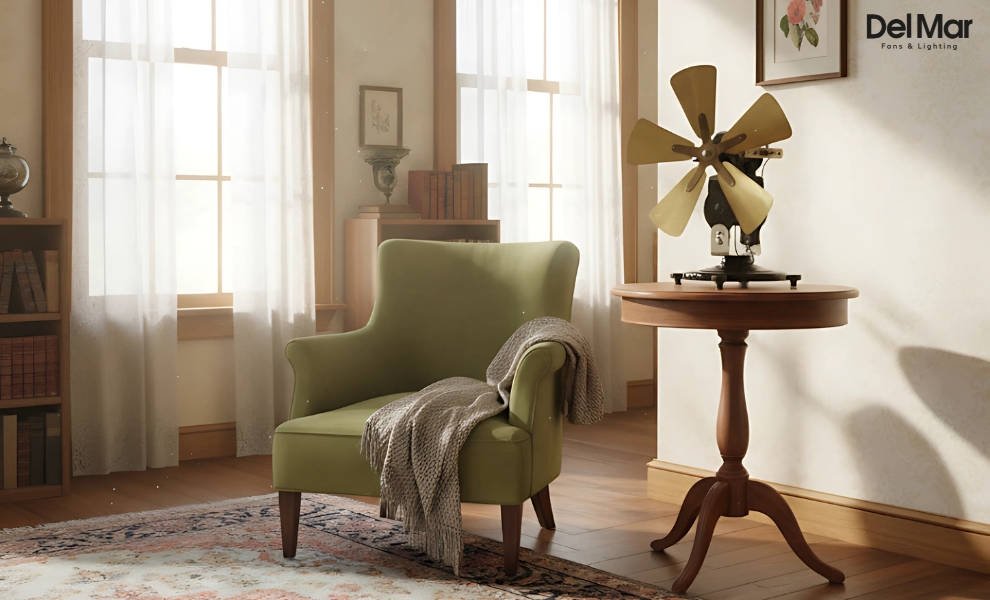
The foundation for modern mechanical ventilation was laid long before electricity was ubiquitous. The creativity of the Industrial Revolution, which sought to channel power into diverse uses, logically included addressing the age-old issue of heat. For anyone asking “When was the first fan invented?” or “When the fan was invented?”, these early systems represent the turning point from handheld cooling to mechanical innovation.
The Industrial Revolution's Breath of Fresh Air: Early Belt-Driven Systems
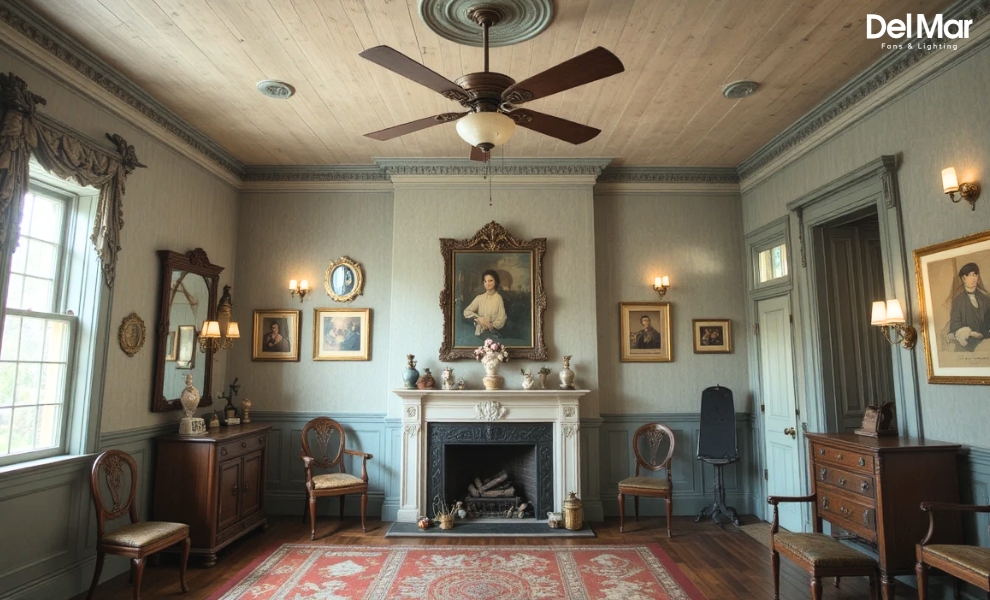
The closing decades of the 18th century and the opening decades of the 19th century were a testing ground for innovation. Workshops and factories, with the swarm of machinery and people, soon became claustrophobic. It was the stimulus for the invention of early, belt-driven fan systems. Visualize a steam engine or waterwheel in the center powering an intricate network of pulleys and belts, similar to the power system of ancient textile mills. These belts would run the length of a building, terminating at propeller-like blades mounted on shafts, usually near the ceiling. Though noisy and a bit bulky, these systems were a giant step. They could displace large amounts of air, creating needed ventilation and cooling for industrial use, paving the way for more sophisticated designs.
When Water Power Confronted the Ceiling: The Birth of the Hydraulic Fan
The closing decades of the 18th century and the opening decades of the 19th century were a testing ground for innovation. Workshops and factories, with the swarm of machinery and people, soon became claustrophobic. It was the stimulus for the invention of early, belt-driven fan systems. Visualize a steam engine or waterwheel in the center powering an intricate network of pulleys and belts, similar to the power system of ancient textile mills. These belts would run the length of a building, terminating at propeller-like blades mounted on shafts, usually near the ceiling. Though noisy and a bit bulky, these systems were a giant step. They could displace large amounts of air, creating needed ventilation and cooling for industrial use, paving the way for more sophisticated designs.
The Electric Spark: Bringing the Ceiling Fan to the Masses
The true revolution in ceiling fan history, the one that made them ubiquitous, began with the advent of electricity. This new power source transformed a novelty into a household essential, and it’s also the milestone that helps answer the popular question, “Who invented the ceiling fan?”
Philip Diehl's Ingenuity: The Single-Motor Breakthrough
In 1882, a name synonymous with sewing machines, Philip Diehl, then working for the Singer Manufacturing Company, applied his inventive genius to the problem of circulating air. Seeing that the small electric motor he applied to his sewing machines could also turn propeller blades, he repurposed this technology. Diehl invented the first electric ceiling fan that utilized a single electric motor to drive the blades directly, bypassing the complex belt or water-powered systems. This was revolutionary. His style was simple, effective, and, most importantly, self-contained so that it could be installed easily and individually controlled. Diehl's innovation gave birth to the contemporary electric ceiling fan and provided the definitive answer to “Who invented the fan?” and “When was the first fan invented?” in the modern sense.
Westinghouse the Innovation Race: Popularizing the "Cool" Factor
While Diehl provided the basic blueprint, the innovation race to develop and mass-produce the electric fan soon gained momentum. Firms such as Westinghouse, already leaders in electrical innovation, could envision the vast potential. They quickly made their versions, with emphasis on improving motor efficiency, blade design, and general aesthetics. This was an era of explosive growth in the electric ceiling fan market. When electricity became more accessible and affordable, so did fans. They rapidly evolved from industrial curiosity to highly sought-after appliances, delivering unprecedented convenience to homes and businesses throughout America and the world.
FAQs on the History and Use of Ceiling Fans
Q1. Who invented the first ceiling fan?
The first ceiling fan is credited to Philip Diehl in 1882. He adapted a small motor used in sewing machines to power fan blades. Before that, large belt-driven ceiling fans and even manually operated punkahs were used to circulate air.
Q2. How did ceiling fans compare to early air conditioning?
Before the air conditioner became widespread, ceiling fans were the main form of indoor cooling. They offered comfort in homes, hotels, and offices while being more affordable and better for energy efficiency and energy costs. Even today, fans work alongside thermostats to help reduce dependence on AC.
Q3. Why were early ceiling fans considered status symbols?
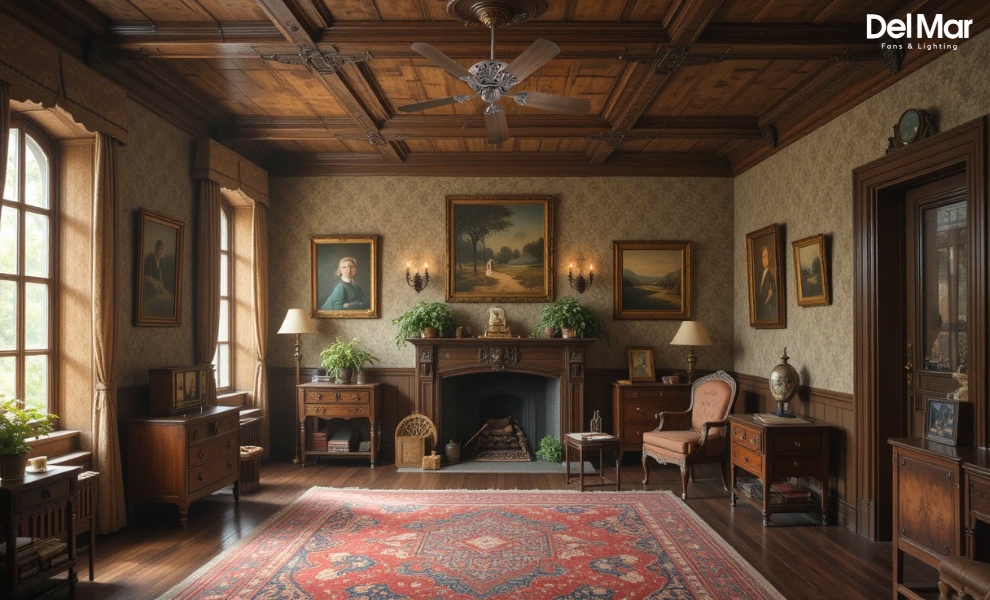
In the early 1900s, ornate fans with carved ceiling fan blades, decorative housings, and even built-in ceiling lights were installed in grand spaces. Much like fine chandeliers, they were a way for homeowners to show wealth, taste, and adoption of modern technology.
Q4. What role do blade pitch and motor design play in fan history?
Over time, engineers experimented with blade pitch to improve airflow and created stronger, quieter fan motors. This allowed fans to run at low speed for gentle comfort or higher speeds for powerful cooling, while reducing wobble and wear.
Q5. When were fans invented, and how did they evolve into ceiling fans?
Handheld fans and palm frond designs go back thousands of years. By the 18th century, workshops were using belt-driven ceiling fans powered by water wheels. The arrival of electricity led to Diehl’s breakthrough, marking the most important milestone in the history of ceiling fans.
Q6. How have controls for ceiling fans changed over time?
Early fans were operated by hand or ropes. Later came the pull chain, which became a standard. Today, fans often connect to a light switch, remote, or even a home assistant, making control more convenient. Some fans even integrate dimmers for their light kits.
Q7. Do modern ceiling fans still carry lessons from history?
Absolutely. From DIY balancing to choosing the right light fixture, fans remain versatile. Many brands, like Hunter Fan, continue to blend historic reliability with new technology like HVAC integration, updraft modes, and smart controls. The history of ceiling fans shows how they’ve adapted to every era while keeping their core purpose: comfort.