

Lighting for aging eyes is not just about brightness; it is about safety, comfort, and independence.
As we age, the human eye requires significantly more light to see the same details clearly. Poor lighting is a hidden risk factor behind falls, eye strain, headaches, and reduced quality of life for seniors, especially in homes that rely on outdated fixtures instead of energy-efficient LED lighting options.
This guide provides clear, science-backed lux and lumen recommendations for seniors, designed for caregivers and multi-generational households who want to create safer, more comfortable living spaces.
Why Lighting Needs Change as We Age
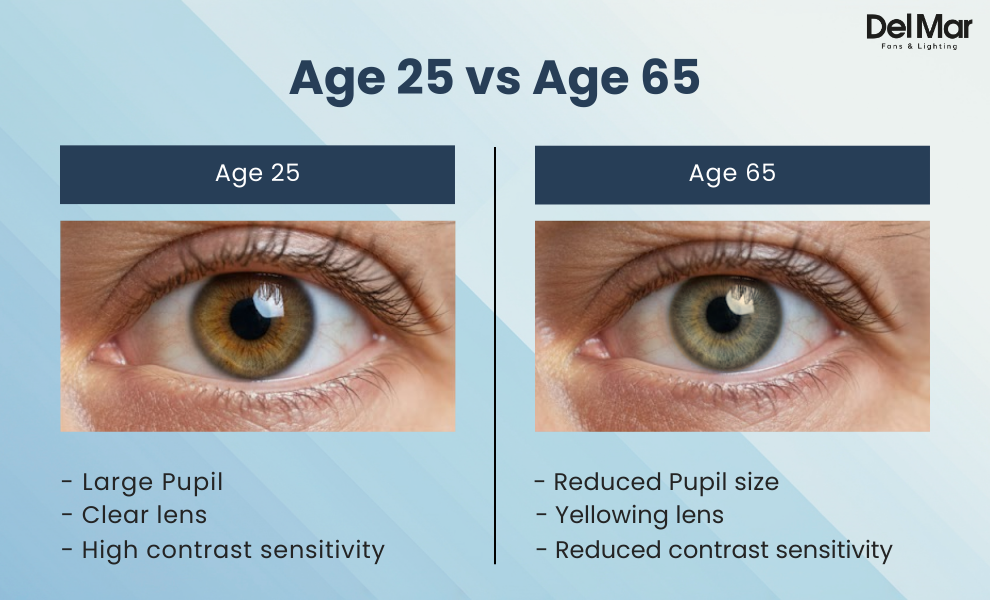
By age 60, the average person needs 2–3 times more light than they did at age 20 to see with the same clarity.
This is not subjective; it’s biological.
How Aging Affects Vision
As we age:
- The eye’s lens yellows and thickens, reducing light transmission
- Pupils become smaller and react more slowly to changes in light
- Contrast sensitivity declines
- Glare becomes harder to tolerate
- Adaptation between light and dark slows significantly
What this means in practice:
A room that feels “well-lit” to a 30-year-old may feel dim, unsafe, or disorienting to a 70-year-old.
Lux vs Lumens: What Caregivers Actually Need to Know
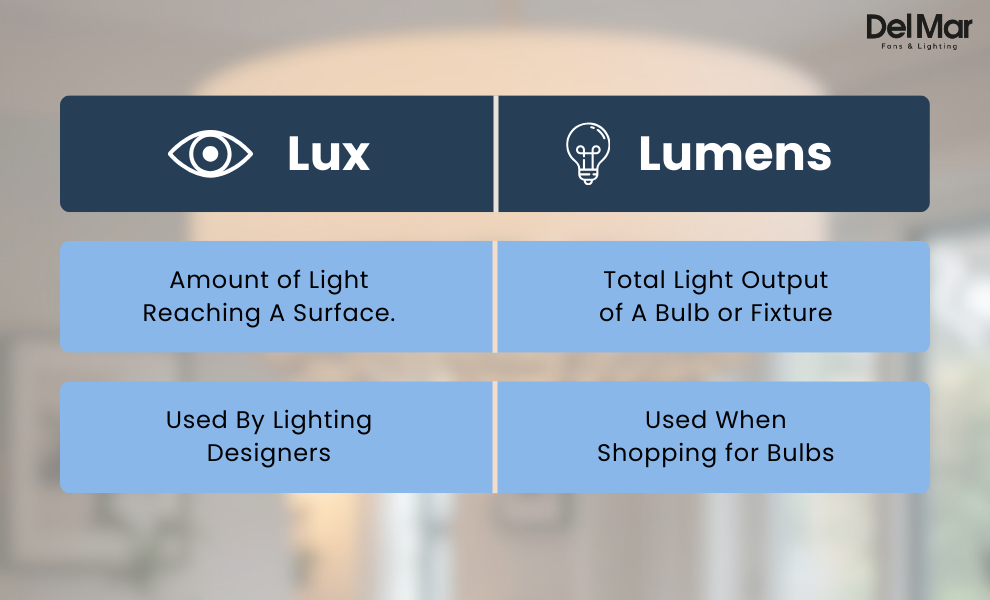
Before diving into recommendations, it’s critical to clarify two commonly confused terms.
What is Lux?
Lux measures the amount of light reaching a surface. It reflects how bright a space actually feels.
- 1 lux = 1 lumen per square meter
- Used by lighting designers and safety standards
- Best metric for senior safety
What Are Lumens?
Lumens measure the total light output of a bulb or fixture.
- Used when shopping for bulbs
- Does not account for room size, ceiling height, or fixture placement
In short:
- Lux = what the eyes experience
- Lumens = what the light source produces
For senior safety lighting, lux is the more important metric, while lumens help you select the right products.
Recommended Lux Levels by Age Group (Based on Vision Science)
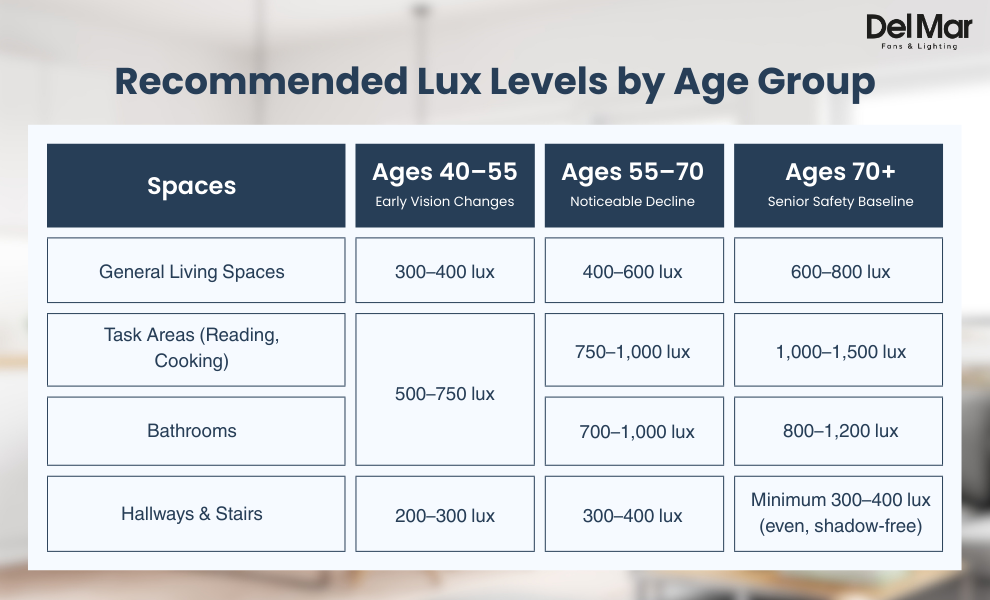
Below are practical, real-world lighting recommendations for aging eyes, based on ophthalmology research and lighting engineering standards.
Ages 40–55: Early Vision Changes
- General living spaces: 300–400 lux
- Task areas (reading, cooking): 500–750 lux
- Bathrooms & Kitchens: 500–700 lux
- Hallways & Stairs: 200–300 lux
At this stage, contrast sensitivity begins to decline, but glare tolerance remains relatively stable.
Ages 55–70: Noticeable Decline
- General living spaces: 400–600 lux
- Task areas: 750–1,000 lux
- Bathrooms: 700–1,000 lux
- Hallways & Stairs: 300–400 lux
At this age:
- Reading small text becomes difficult
- Shadows become more problematic
- Uneven lighting increases fall risk
Ages 70+: Senior Safety Baseline
- General living spaces: 600–800 lux
- Task areas: 1,000–1,500 lux
- Bathrooms & kitchens: 800–1,200 lux
- Hallways & stairs: Minimum 300–400 lux (even, shadow-free)
Key insight:
For seniors, uniformity matters as much as brightness. Bright spots mixed with dark areas increase disorientation and glare.
Lumens for Senior Lighting: Practical Room-by-Room Guide
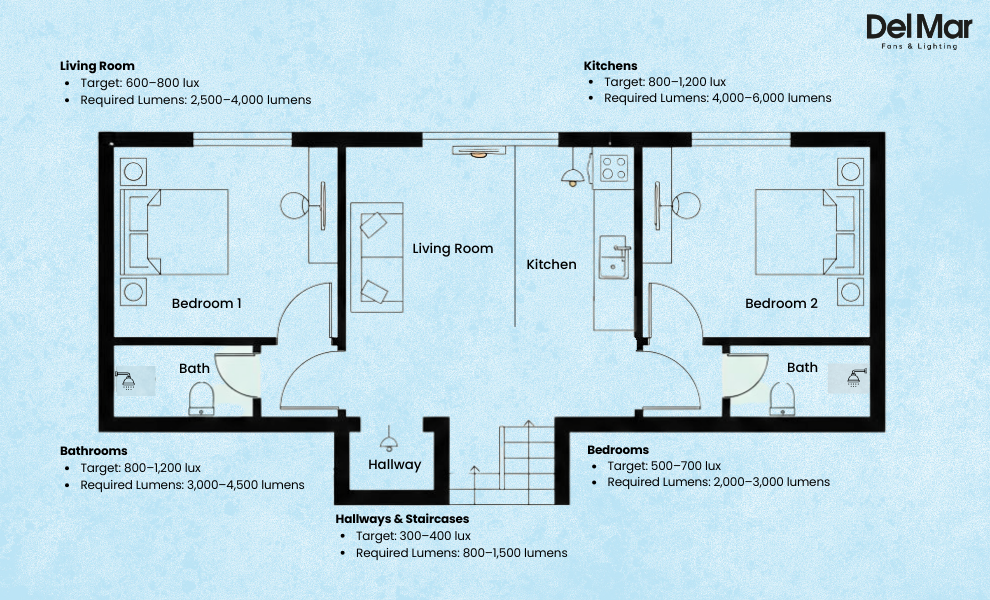
While lux is the target, caregivers shop using lumens. Below is a simplified conversion approach for typical home environments, based on how to choose the right lighting for each room in a senior-friendly home.
Living Rooms (Seniors 65+)
- Target: 600–800 lux
- Typical lumens needed: 2,500–4,000 lumens
- Strategy: Layered lighting (ceiling + lamps)
Bedrooms
- Target: 500–700 lux
- Typical lumens needed: 2,000–3,000 lumens
- Include bedside task lighting to reduce nighttime fall risk
Kitchens
- Target: 800–1,200 lux
- Typical lumens needed: 4,000–6,000 lumens
- Emphasize under-cabinet lighting to reduce shadows
Bathrooms
- Target: 800–1,200 lux
- Typical lumens needed: 3,000–4,500 lumens
- Vertical lighting beside mirrors reduces facial shadows and is a core principle of safe bathroom lighting solutions for aging adults.
Hallways & Staircases
- Target: 300–400 lux
- Typical lumens needed: 800–1,500 lumens
- Continuous, glare-free lighting is critical for safety
Best Lighting for Seniors: Color Temperature & Glare Control
Brightness alone is not enough. Light quality matters more as eyes age.
Recommended Color Temperature
- 2700K–3000K for bedrooms and living spaces (warm, calming)
- 3000K–3500K for kitchens and bathrooms (better contrast)
- Avoid harsh 4000K+ lighting unless medically recommended
Warm light improves comfort, while slightly cooler tones improve contrast without increasing glare; an approach that mirrors strategies for improving comfort without increasing energy use throughout the home.
Glare Reduction: A Safety Priority
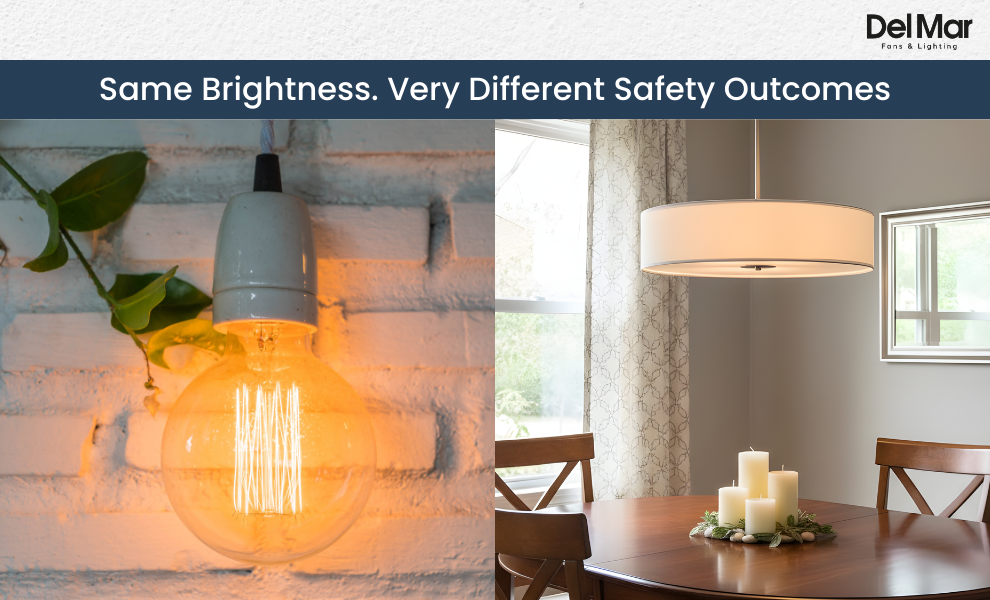
Aging eyes are extremely sensitive to glare.
Best practices:
- Use diffused fixtures
- Avoid exposed bulbs
- Choose matte or frosted lenses
- Position lights to avoid direct line-of-sight exposure
Glare causes more falls than low brightness.
Even very bright lighting can be dangerous if poorly controlled.
Senior Safety Lighting: Design Principles That Reduce Falls
Lighting design for seniors should follow three non-negotiable rules when creating a safer home for aging in place.
1. Uniform Illumination
Avoid sharp contrasts between rooms, hallways, and staircases. Gradual transitions reduce disorientation.
2. Layered Lighting
Combine:
- Ambient (general)
- Task (focused)
- Accent (orientation)
Layered lighting allows flexibility without relying on a single harsh source.
3. Nighttime Visibility
Low-level night lights (50–100 lux) in hallways and bathrooms help prevent falls without disrupting sleep cycles.
Common Lighting Mistakes in Multi-Generational Homes
Many homes unintentionally create unsafe conditions for seniors.
Mistake #1: “It Looks Bright Enough”
Visual perception varies by age. Always measure or estimate lux levels.
Mistake #2: Cool, Harsh LEDs Everywhere
High color temperature increases glare and discomfort.
Mistake #3: Single Overhead Fixtures
Overhead-only lighting creates shadows that aging eyes struggle to interpret.
How to Upgrade Lighting Without Remodeling
You do not need a full renovation to improve senior safety lighting.
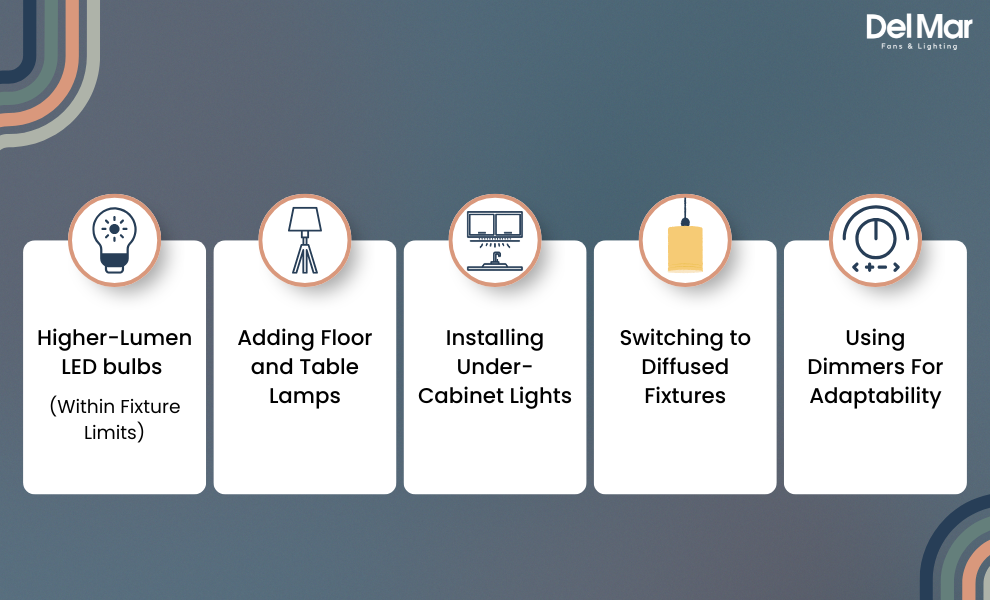
Simple upgrades:
- Higher-lumen LED bulbs (within fixture limits)
- Adding floor and table lamps
- Installing under-cabinet lights
- Switching to diffused fixtures
- Using dimmers for adaptability
Small changes can dramatically reduce fall risk and eye strain.
Quick Reference: Senior Lighting Recommendations
In short:
- Seniors need 2–3× more light than younger adults
- Target 600–800 lux for general spaces (65+)
- Task areas often require 1,000+ lux
- Use warm-to-neutral color temperatures
- Eliminate glare and harsh shadows
- Prioritize uniform, layered lighting
Small changes, such as upgrading fixtures designed for even illumination, can dramatically reduce fall risk and eye strain when selecting indoor lighting fixtures suited for senior safety.
Lighting is Preventive Care
Lighting for aging eyes is not cosmetic; it is preventive safety infrastructure.
Well-designed senior lighting:
- Reduces falls
- Improves confidence and independence
- Eases eye strain
- Enhances overall quality of life
For caregivers and multi-generational households, investing in proper lighting is one of the highest-impact, lowest-disruption safety improvements you can make.
If you are planning lighting upgrades with senior safety in mind, start with lux targets first, then choose fixtures and bulbs that deliver comfort, clarity, and consistency, because good lighting isn’t just seen, it’s felt.
More Helpful Resources:
1. Understanding LED Lights - Kelvin, Lumens and CRI
2. How to Pick the Perfect Vanity Light: A Comprehensive Guide
