


Lighting is one of the most powerful elements in a home, yet it’s often one of the least planned.
Think about it - a room can have beautiful furniture, great colors, and thoughtful décor, but if the lighting is harsh, dim, or poorly placed, the space never feels quite right.
The goal of good lighting isn’t simply to brighten a room. It’s to make the space comfortable, functional, and visually balanced. The right lighting should help you cook more easily, relax more comfortably, and enjoy your home throughout the day.
This home lighting guide walks through how to plan lighting for different rooms in your home. From brightness levels and lumens to color temperature and fixture placement, understanding these fundamentals makes it much easier to choose lighting that truly works for your lifestyle.
Understanding the Basics of Home Lighting

Before choosing fixtures for individual rooms, it helps to understand a simple concept used by lighting designers called layered lighting.
Rather than relying on a single overhead light, good lighting design combines multiple light sources that serve different purposes.
Most rooms benefit from three kinds of lighting:
- Ambient lighting (overall illumination): This is the main source of light that brightens the entire room and makes the space usable. It provides enough visibility for everyday movement, conversation, and general activities. Ceiling fixtures, chandeliers, recessed lights, and ceiling fans with lights are commonly used to create even, comfortable illumination throughout the room.
- Task lighting (activity-based lighting): This type of lighting is designed to support specific tasks that require better visibility and precision. It directs light exactly where it’s needed, such as on a kitchen countertop, reading chair, desk, or vanity mirror. Desk lamps, under-cabinet lights, and bedside reading lamps are typical examples that improve clarity and reduce eye strain.
- Accent lighting (decorative highlighting): Decorative lighting adds depth and visual interest by drawing attention to design elements within a room. Instead of lighting the entire space, it highlights architectural details, artwork, shelving, or textured walls. Wall sconces, picture lights, and LED strip lighting are often used to create this subtle yet impactful layer of illumination.
Together, these layers improve brightness, reduce glare, and create a more comfortable environment.
For example, a living room might use a ceiling fan with lights for general illumination, table lamps for reading, and wall sconces to highlight artwork.
This combination helps the room feel balanced rather than overly bright or uneven.
How Bright Should Each Room Be?
Brightness in lighting is measured using lumens, which indicate how much visible light a fixture produces.
Instead of choosing lighting based only on watts, it’s much more helpful to think about the total brightness needed for a room.
Below is a quick reference table for typical residential spaces.
| Room | Recommended Lumens |
|---|---|
| Living Room | 1,500 – 3,000 |
| Kitchen | 3,000 – 4,000 |
| Bedroom | 1,000 – 2,000 |
| Bathroom | 2,000 – 4,000 |
| Dining Room | 1,500 – 3,000 |
| Home Office | 3,000 – 4,000 |
These ranges allow homeowners to create comfortable brightness levels without overwhelming the space.
Understanding Color Temperature

Color temperature describes the warmth or coolness of light, and it plays a big role in how comfortable a room feels. It’s measured in Kelvin (K). Lower Kelvin values produce warmer, yellow-toned light that feels cozy and relaxing, while higher Kelvin values create cooler, whiter light that appears brighter and more energizing. Choosing the right color temperature helps match lighting to how a room is used and improves overall eye comfort.
| Kelvin | Light Appearance | Best For |
|---|---|---|
| 2700K | Warm White | Bedrooms, Living Rooms |
| 3000K | Soft White | Dining Rooms, Hallways |
| 3500K | Neutral White | Home Offices |
| 4000K+ | Cool White | Kitchens, Bathrooms |
Warmer light feels relaxing and cozy, while cooler light improves clarity for tasks.
Choosing the right color temperature can dramatically change how comfortable a room feels.
Living Room Lighting

The living room is where many of life’s everyday moments happen. It’s where families relax after work, watch movies, entertain guests, and spend quiet evenings together.
Because the living room serves so many purposes, lighting should feel flexible and comfortable, not overly bright or flat.
Instead of relying on a single ceiling light, most living rooms benefit from multiple lighting sources placed around the room.
A central ceiling fixture or ceiling fan with lights often provides the main illumination. Table lamps placed on side tables can create softer pools of light, making the space feel more inviting in the evening.
Accent lighting — such as wall sconces or cabinet lighting — can highlight artwork or bookshelves, adding depth to the room.
Warm lighting around 2700K to 3000K generally works best in living rooms because it creates a relaxed atmosphere that encourages conversation and comfort.
Also read Lighting mistakes to avoid in the living room
Kitchen Lighting
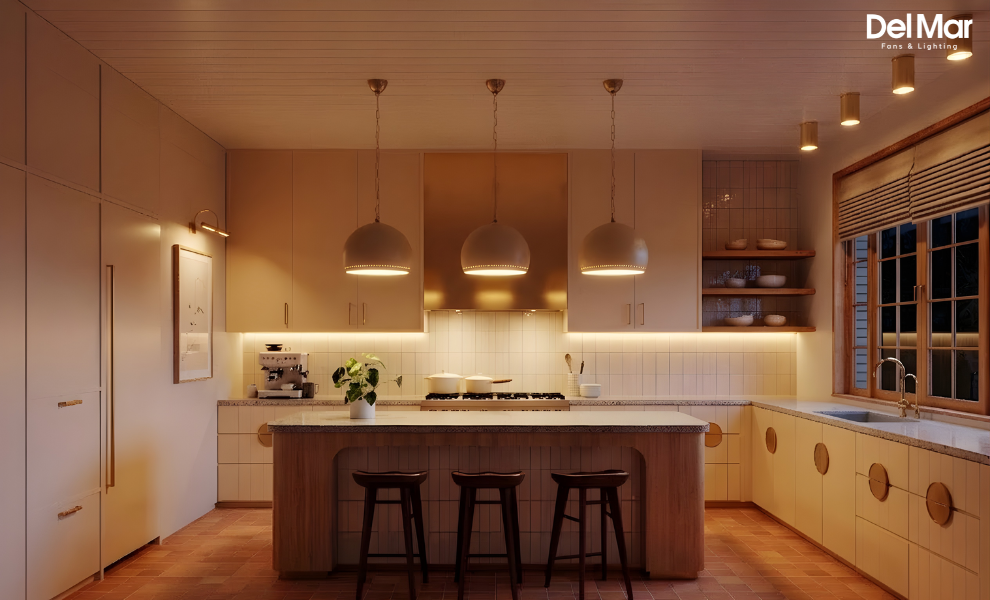
The kitchen is one of the busiest areas in a home, and it requires some of the brightest lighting.
Cooking, preparing food, reading recipes, and cleaning all demand good visibility. Poor kitchen lighting can create shadows on countertops, making everyday tasks more difficult.
Ideal kitchen lighting uses a combination of ceiling lighting and focused lighting around work areas.
Overhead lighting, often recessed fixtures or flush mount lights, illuminates the room overall. Pendant lights above a kitchen island provide both practical lighting and visual interest.
Under-cabinet lighting is one of the most helpful additions in kitchen design because it directly illuminates the countertop surface.
Neutral white lighting between 3000K and 4000K is usually ideal in kitchens because it improves visibility while maintaining a natural appearance.
Kitchen Lighting Guide Table
| Kitchen Area | Recommended Lighting |
|---|---|
| Ceiling | Recessed lights or flush mount |
| Kitchen Island | Pendant lights |
| Countertops | Under cabinet lighting |
| Cabinets | Accent strip lighting |
Bedroom Lighting

The bedroom is where you retreat after a long day. It’s the place where you unwind, read a book, scroll through your phone, or simply relax before sleep.
Because of that, bedroom lighting should feel intentional and calming, not harsh or overly bright.
Many bedrooms use a ceiling fan with lights or a flush mount fixture as the primary light source. This provides general illumination when needed, such as getting dressed or cleaning.
However, softer lighting around the room is what really makes a bedroom feel comfortable. Bedside lamps allow for nighttime reading without flooding the entire room with light.
Wall sconces or dimmable lighting can add a gentle glow that feels relaxing rather than intrusive.
Warm lighting between 2700K and 3000K works best for bedrooms because it supports relaxation and eye comfort.
Also read Dos and Donts of Bedroom Lighting
Bedroom Lighting Table
| Bedroom Area | Recommended Lighting |
|---|---|
| Ceiling | Flush mount light or fan with light |
| Bedside | Table lamps or sconces |
| Closet | LED strip or ceiling light |
| Accent | Cove or wall lighting |
Bathroom Lighting

Bathrooms need bright, clear lighting — especially around mirrors.
Many people rely on a single overhead light, but this often creates shadows on the face when standing in front of the mirror.
A better approach is to combine ceiling lighting with vanity lighting placed near eye level.
This provides more balanced illumination when shaving, applying makeup, or styling hair.
Neutral white lighting around 3000K–4000K works well in bathrooms because it produces accurate color visibility.
Read the bathroom lighting essentials guide for step-by-step instructions.
| Bathroom Area | Recommended Lighting |
|---|---|
| Ceiling | Flush mount or recessed lights |
| Vanity | Vertical vanity lights |
| Shower | Damp rated lighting |
| Accent | LED strip lighting |
Dining Room Lighting
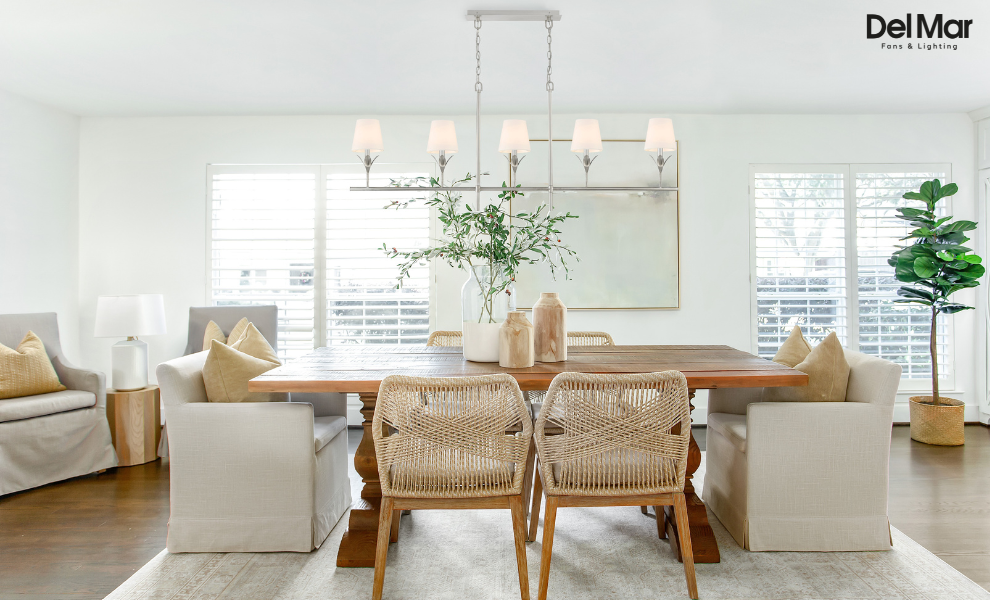
Dining rooms focus less on brightness and more on atmosphere.
A chandelier or pendant light placed above the dining table often becomes the centerpiece of the room.
The light should be bright enough to illuminate meals but soft enough to create a warm, inviting environment.
Lighting between 2700K and 3000K works best for dining spaces.
Home Office Lighting

As more people work from home, office lighting has become increasingly important.
The right lighting helps reduce eye strain, improve concentration, and make video calls look more natural.
Desk lamps are particularly useful because they provide focused light directly where work happens.
Neutral white lighting around 3500K–4000K improves clarity and alertness.
Common Lighting Mistakes to Avoid
Many homeowners unintentionally make lighting choices that affect comfort and functionality.
Some of the most common mistakes include:
• relying on a single ceiling light
• ignoring brightness levels
• choosing mismatched color temperatures
• placing lights where they create glare
Avoiding these issues makes a dramatic difference in how a room feels.
FAQs on Home Lighting
1. What is the best lighting for a living room?
Living rooms benefit from layered lighting that combines overhead illumination with lamps and accent lighting. Warm light between 2700K and 3000K usually creates the most comfortable atmosphere.
2. How bright should kitchen lighting be?
Most kitchens require between 3,000 and 4,000 lumens to provide clear visibility for cooking and food preparation.
3. What color temperature is best for bedrooms?
Warm lighting between 2700K and 3000K helps create a relaxing environment that supports sleep and comfort.
4. What lighting works best for home offices?
Neutral white lighting between 3500K and 4000K improves concentration and reduces eye strain during work.
Final Thoughts
Choosing lighting for your home is about more than simply installing fixtures. It’s about understanding how each room is used and creating a comfortable environment that supports daily life.
By combining the right brightness levels, color temperature, and thoughtful fixture placement, you can create spaces that feel welcoming, functional, and beautifully balanced.
A well-planned lighting design doesn’t just illuminate a home; it enhances how the home is experienced.
Related Resources:
