

In today's world, energy is required in almost every aspect of our lives. From cooling our homes to charging our devices, washing our clothes, cooking our favorite dishes, and so much more, energy is one of the most important elements for running our daily routine smoothly. However, the type and quantity of energy we use have significant impacts on our environment. Yes, you read that right! It is pivotal to save energy not just to cut down your power bills but it is a great initiative towards protecting the planet Earth.
Read this all-inclusive blog to learn the benefits of saving energy, dive into renewable and nonrenewable resources, and discuss which type of energy is ultimately better for the planet. So, without further ado, let's get sarted.
Why Saving Energy Makes Sense

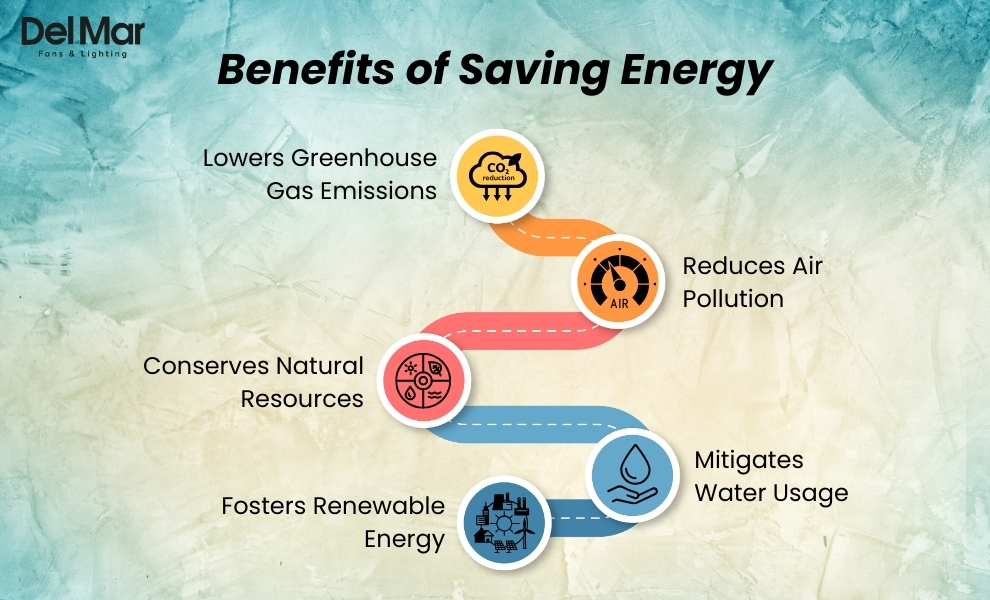
Saving electricity helps the environment in multiple ways:
1. Lowers Greenhouse Gas Emissions
Fossil fuels like coal, oil, and natural gas are some of the main sources to generate electricity. However, electricity generated through fossil fuels is a major reason behind harmful greenhouse gasses like carbon dioxide (CO2) emissions. This further contributes to global warming and climate change. By saving energy, we lower the demand for energy from these sources, helping to reduce GHG emissions.
2. Reduces Air Pollution
Electricity production releases sulfur dioxide (SO2), nitrogen oxides (NOx), and other harmful pollutants into the air. These pollutants can harm human health, ecosystems, and wildlife. Reducing electricity usage reduces the amount of air pollution.
3. Natural Resources Conservation
Coal, natural gas, and oil are some of the non-renewable resources power plants usually rely on. By conserving electricity, we reduce the need for extracting and depleting these finite resources, helping to preserve them for future generations and reducing the environmental impact of mining and drilling activities.
4. Mitigates Water Usage
Thermal power plants require a large quantity of water for cooling while generating electricity. Lowering energy consumption helps save water resources, which is necessary for maintaining ecosystems.
5. Fosters Renewable Energy
When lowering electricity usage, it becomes easier to shift to renewable energy sources like solar, wind, and water, which are cleaner and more sustainable, thereby reducing dependency on fossil fuels.
Understanding Renewable & Nonrenewable Energy Sources
To fully understand the impact of saving energy, let’s learn about renewable and nonrenewable resources.
Electricity can be generated from both renewable and nonrenewable sources, each having different environmental impacts. Understanding these sources and their effects is vital for making informed energy choices that prioritize environmental sustainability.
Renewable Energy Sources
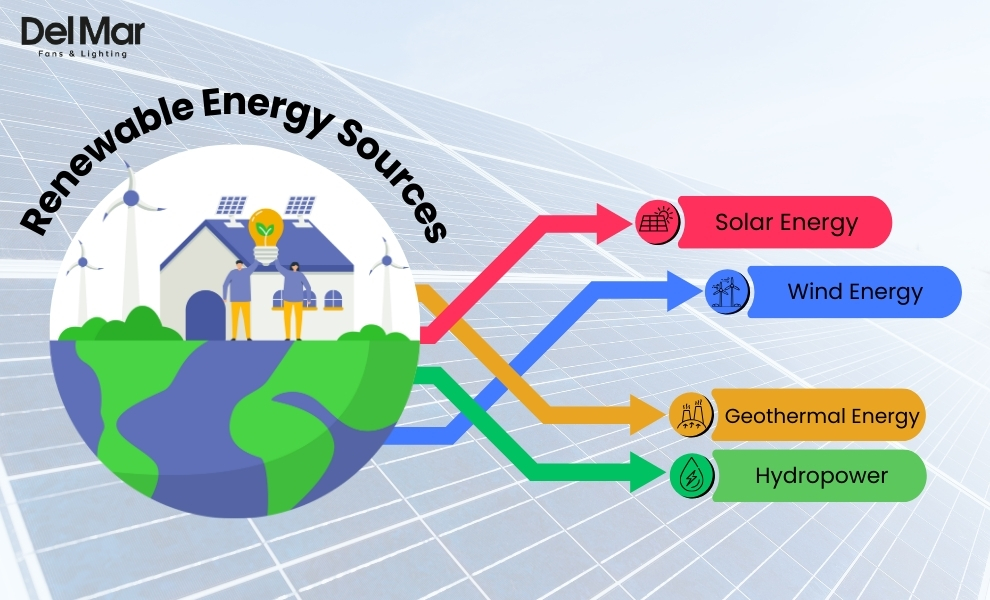
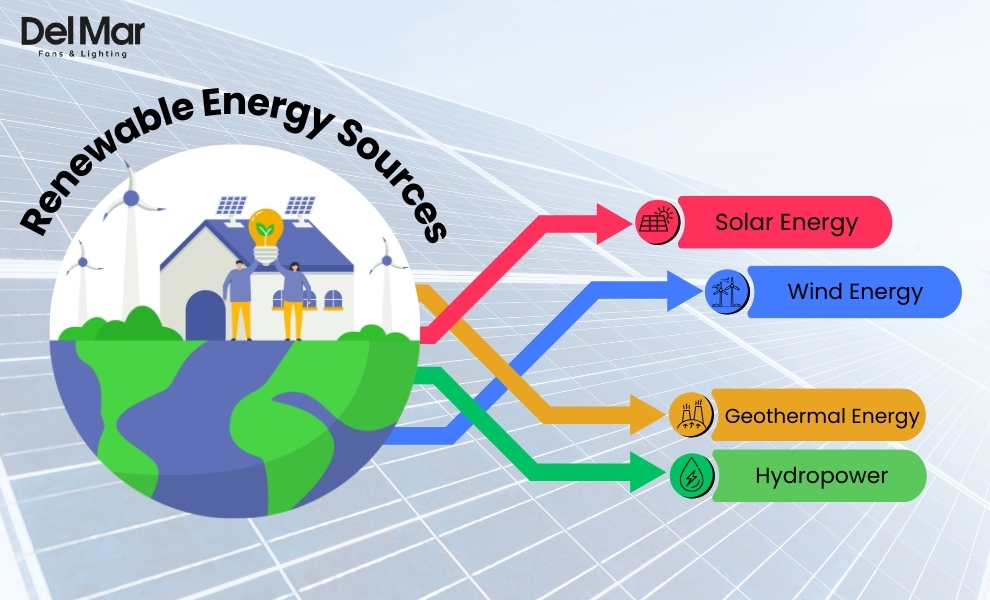
Obtained from natural elements, renewable energy resources are widely considered environmentally friendly and produce little to no pollution.
- Solar Energy: Here, sunlight is used to produce electricity with no emissions. However, manufacturing of solar panels can involve the use of harmful materials and large-scale installations may require significant land.
- Wind Energy: Wind turbines are used to produce electricity with zero emissions. However, it can cause potential risks to birds and bats.
- Geothermal Energy: Using the earth’s internal heat to produce electricity with minimal emissions. However, geothermal plants can result in localized environmental changes, such as land subsidence.
- Hydropower: Electricity is produced using high water flow with no direct emissions.
Key points about renewable energy:
- Infinite Supply: Solar, water, and wind energy, for instance, are sustainable as long as the sun shines, water flows, and the wind blows.
- Minimal Carbon Emissions: As mentioned already, electricity generated through solar panels or wind turbines produces little CO₂ emissions.
- Environmental Protection: Renewable energy systems, such as wind farms or solar arrays once operational have minimal impacts on natural habitats.
Nonrenewable Energy Sources
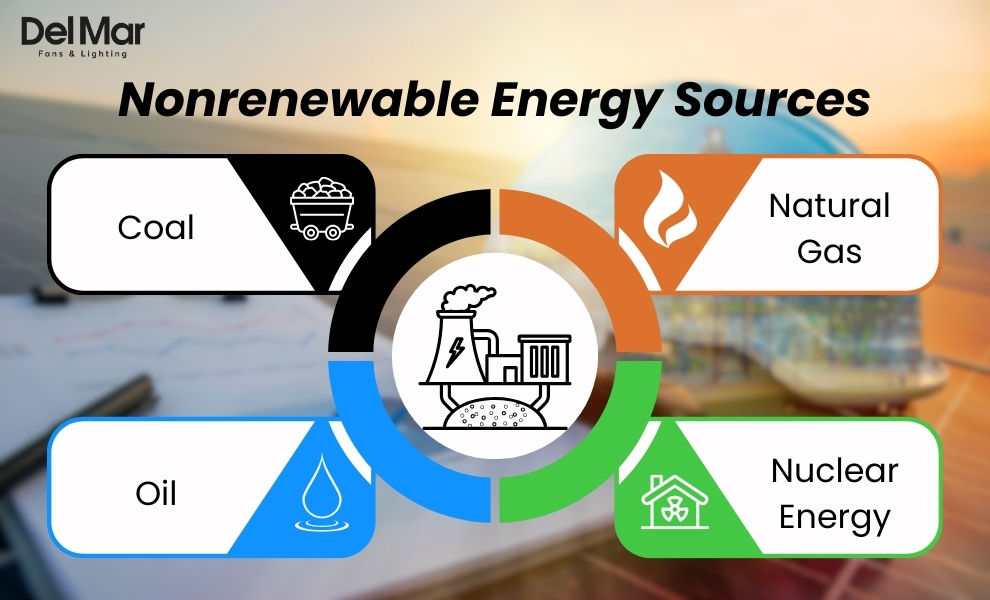
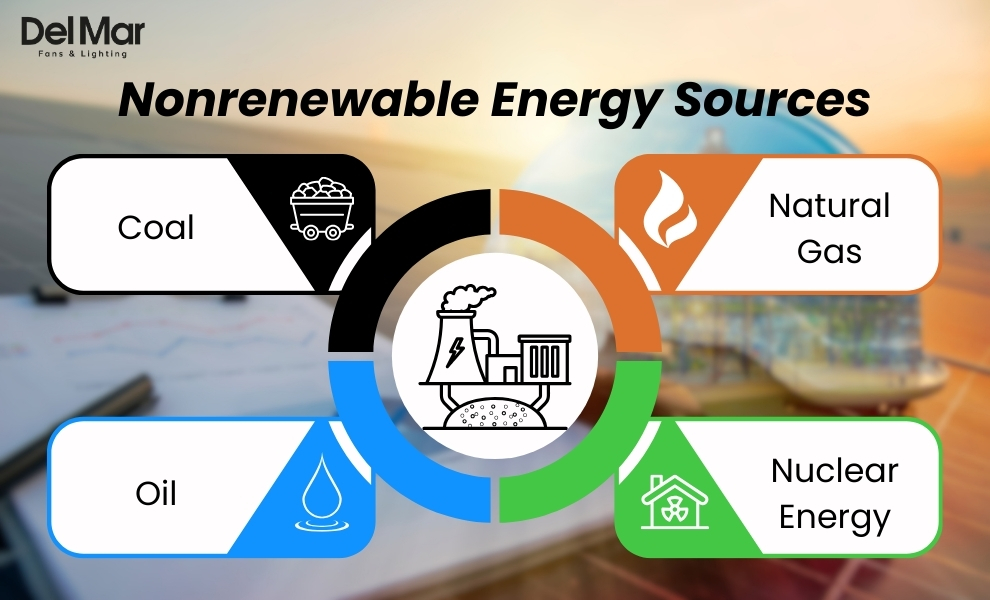
Nonrenewable energy resources, including fossil fuels, are limited in supply and cannot be replaced once they are depleted. When burned, these resources discharge significant amounts of CO₂ and other harmful pollutants that not only deteriorate human health but also contribute to climate change and environmental degradation.
- Coal: Coal is burned to generate electricity which further releases significant amounts of carbon dioxide, sulfur dioxide, and other dangerous pollutants, contributing to air pollution.
- Natural Gas: Though it burns cleaner than coal, it still emits greenhouse gases, mainly methane, which has a high global warming potential.
- Oil: Combustion of oil produces immense amounts of carbon dioxide and other pollutants, contributing to air pollution, acid rain, & oil spills that have adverse effects on the environment.
- Nuclear Energy: Though electricity generated through nuclear plants produces low greenhouse gas emissions, it poses potential risks from radioactive waste and possible catastrophic accidents.
Key points about nonrenewable energy:
- Limited Availability: It takes millions of years for fossil fuels like coal and oil to form, and once used, they can’t be replaced.
- High Pollution Levels: Burning fossil fuels emits greenhouse gases, which eventually contribute to global warming.
- Environmental Impact: Extraction processes such as mining and drilling for these resources cause habitat destruction, water pollution, and soil erosion.
Which is Better Between Renewable & Nonrenewable Energy Sources?
While both renewable and nonrenewable resources play roles in meeting energy demands, renewable energy is widely regarded as the superior choice for environmental sustainability for several reasons:
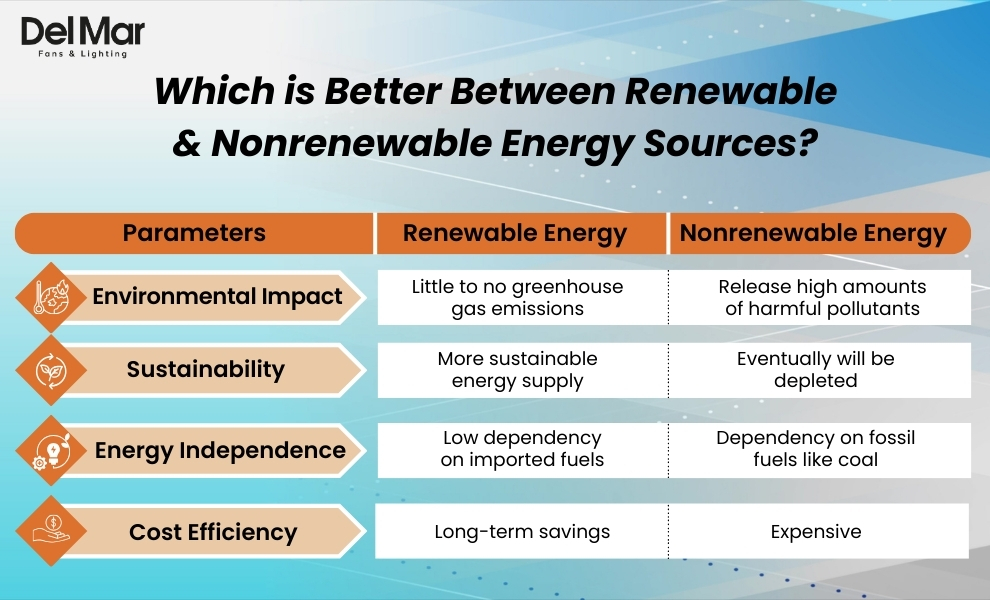
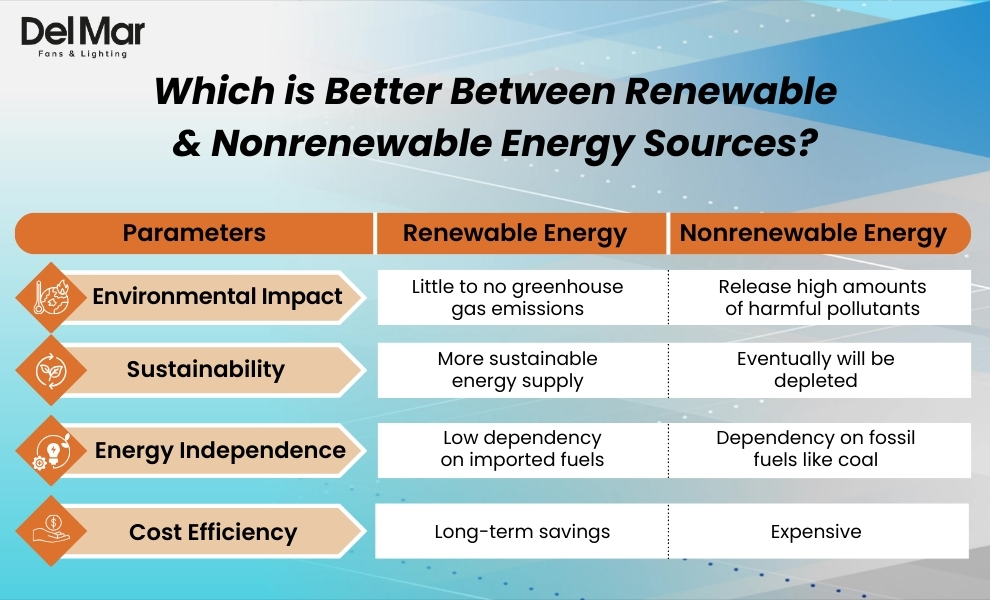
- Environmental Impact: Renewable energy sources like wind, solar, and water produce little to no greenhouse gas emissions during electricity production, significantly lowering their contribution to climate change and air pollution. In contrast, nonrenewable sources release high amounts of carbon dioxide and other harmful pollutants.
- Sustainability: Renewable resources are abundant and naturally replenished, ensuring a more sustainable energy supply. Nonrenewable resources, however, are limited and will eventually be depleted, leading to high costs and energy insecurity.
- Energy Independence: Investing in renewable energy can lower dependency on imported fuels, enhancing energy security and stability for countries and communities.
- Long-term Cost Efficiency: While initial investments in renewable technologies may be high, they often lead to lower operational costs and greater energy savings over time. In contrast, nonrenewable energy sources are subject to price volatility & rising extraction costs.
Practical Ways to Save Energy

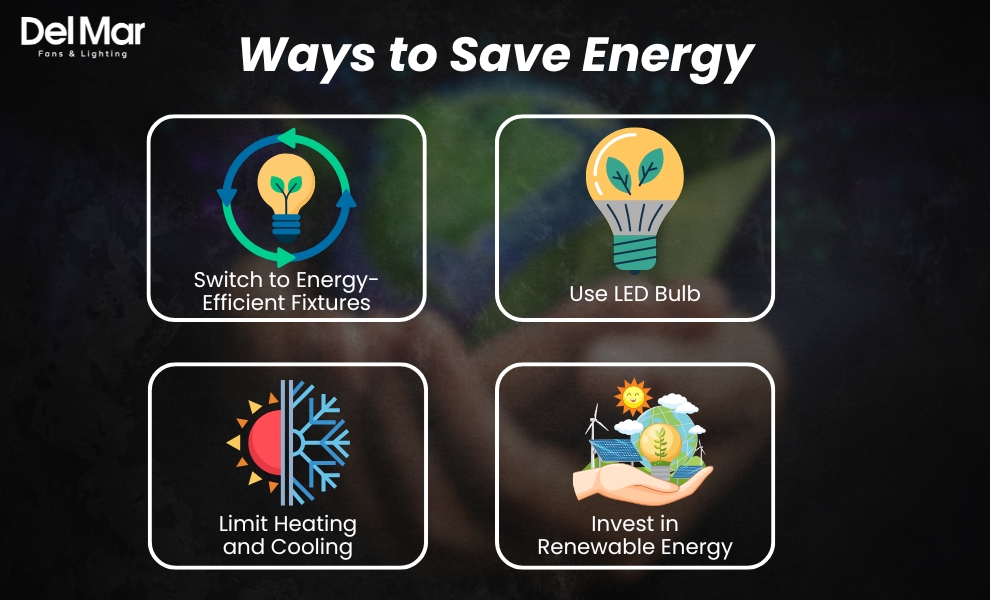
How can you contribute to energy conservation? Here are a few steps you can take:
- Switch to Energy-Efficient Fixtures: Install energy-efficient ceiling fans and ceiling lights for optimal energy savings.
- Use LED Bulbs: LED bulbs use less electricity and last longer than traditional incandescent bulbs.
- Limit Heating and Cooling: Reduce HVAC use by dressing appropriately for the weather, setting thermostats at moderate levels, and using fans or natural ventilation.
- Invest in Renewable Energy: Consider installing solar panels or using green energy options offered by your local utility provider.
To learn more about various ways to save energy, read our blog titled: How To: Energy Efficient Heating and Cooling.
Preserving energy is one of the most impactful ways to protect the environment. Lowering our energy consumption reduces our greenhouse gas emissions and help conserve the planet’s valuable resources. Switching from nonrenewable to renewable energy sources is key to a sustainable future. Although renewable energy requires initial investments, its long-term environmental and economic benefits make it the better choice for a greener world.
Every small action—from using energy-efficient fixtures to investing in solar power—contributes to a larger movement toward energy conservation and environmental sustainability.