


Featured: Hudson Valley Floral Park
As winter fades away, spring brings longer days, softer sunlight, and a renewed sense of freshness. It’s the perfect time to update your home, and one of the easiest ways to do that is through lighting.
Many living rooms still carry the dull, warm, and sometimes heavy lighting setups from winter. While cozy lighting works well during colder months, it can make your space feel dim and outdated as the seasons change.
The good news? You don’t need a full renovation. With a few smart updates, living room spring lighting can completely transform your space, making it brighter, more inviting, and aligned with the energy of the season. This guide will show you exactly how to refresh living room lighting with simple, practical ideas.
What Is Living Room Spring Lighting
Living room spring lighting refers to a lighting approach that focuses on brighter, lighter, and more natural illumination to match the spring season. It combines natural light, energy-efficient bulbs, and layered lighting techniques to create an open, fresh, and uplifting atmosphere.
Why Spring Lighting Matters in Your Living Room

1. Mood Boost
Spring lighting naturally enhances your mood. Brighter environments are linked to increased energy and positivity, making your living room feel more alive.
2. Space Enhancement
Using bright living room lighting ideas can visually expand your space, making even smaller rooms feel open and airy.
3. Energy Savings
Switching to efficient bulbs and maximizing daylight reduces electricity usage, helping you save on energy bills.
How to Refresh Your Living Room Lighting for Spring
1. Maximize Natural Light in Your Living Room
One of the simplest natural light living room tips is to let sunlight do most of the work.
2. Replace heavy curtains with sheer or light fabrics
- Use mirrors to reflect sunlight across the room
- Keep windows clean and unobstructed
- Rearrange furniture to avoid blocking light sources
- Natural light instantly makes your living room feel fresh and vibrant.
3. Switch to Brighter, Seasonal Bulbs
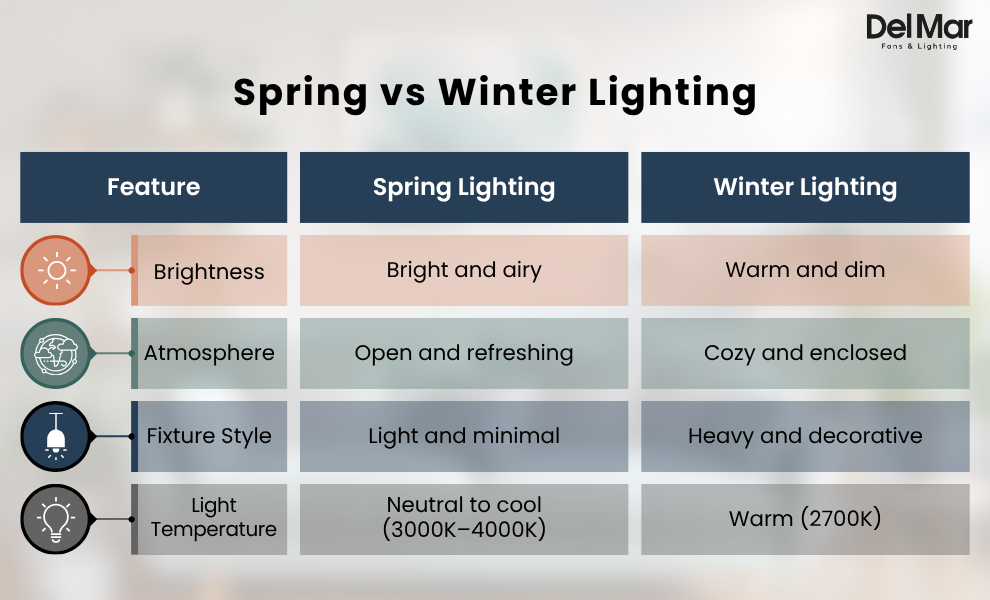
Winter lighting often leans toward warm yellow tones (around 2700K). For spring, shift to cooler, brighter tones between 3000K and 4000K.
- 3000K: Soft warm white (balanced and inviting)
- 4000K: Cool white (clean and energizing)
Choosing energy efficient lighting for living room setups like LED bulbs not only improves brightness but also reduces power consumption.
4. Use Layered Lighting for Better Ambience

A well-designed layered lighting living room setup combines three types of lighting:
- Ambient lighting: Main source (ceiling lights)
- Task lighting: Focused lighting (reading lamps)
- Accent lighting: Decorative highlights (wall lights, LED strips)
Layering allows you to control brightness and create different moods throughout the day. To achieve this effect effortlessly, incorporating minimal style lamps in corners or side tables can add both function and a clean, modern aesthetic without overwhelming the space.
5. Upgrade Fixtures for a Modern Spring Look
Spring is all about lightness and simplicity. Updating fixtures can instantly modernize your space.
- Choose materials like glass, linen, or light metals
- Opt for minimal, clean designs
- Replace bulky chandeliers with sleeker options
For a more refined and contemporary update, consider modern sleek chandeliers that offer visual impact without the heaviness of traditional designs. These align perfectly with modern spring lighting trends and keep your space feeling open and elegant. Additionally to ensure balance and proportion, explore the chandelier size guide before making your selection.
Best Spring Lighting Ideas for Living Room
If you’re looking for inspiration, here are some practical spring lighting ideas for living room spaces:
1. Ceiling Lights
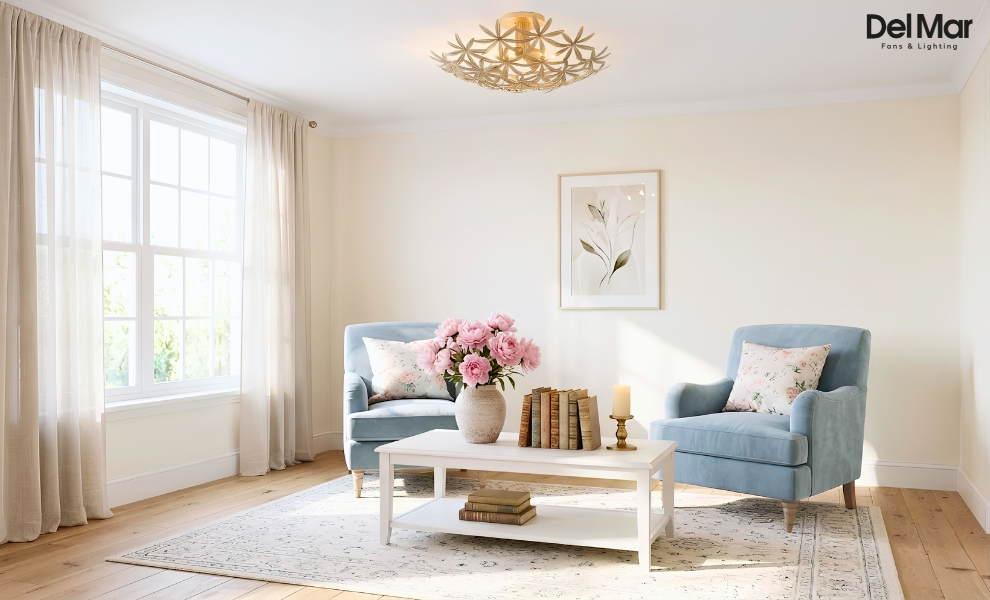
- Pendant lights for style and focus
- Semi-flush fixtures for balanced brightness
For a crisp and updated ceiling look, contemporary style flush mounts work exceptionally well, especially in spaces that need bright, even illumination without bulky designs.
2. Lamps

- Floor lamps with light shades
- Table lamps for soft, layered lighting
- Adjustable lamps for reading corners
3. Accent Lighting

- LED strip lights behind shelves or TV units
- Wall sconces for subtle elegance
- Decorative lights to highlight artwork
To uplift your walls with a soft yet stylish glow, opt for wall sconces with chrome and off white finish, which blend beautifully with spring-inspired interiors and neutral palettes.
4. Statement Lighting
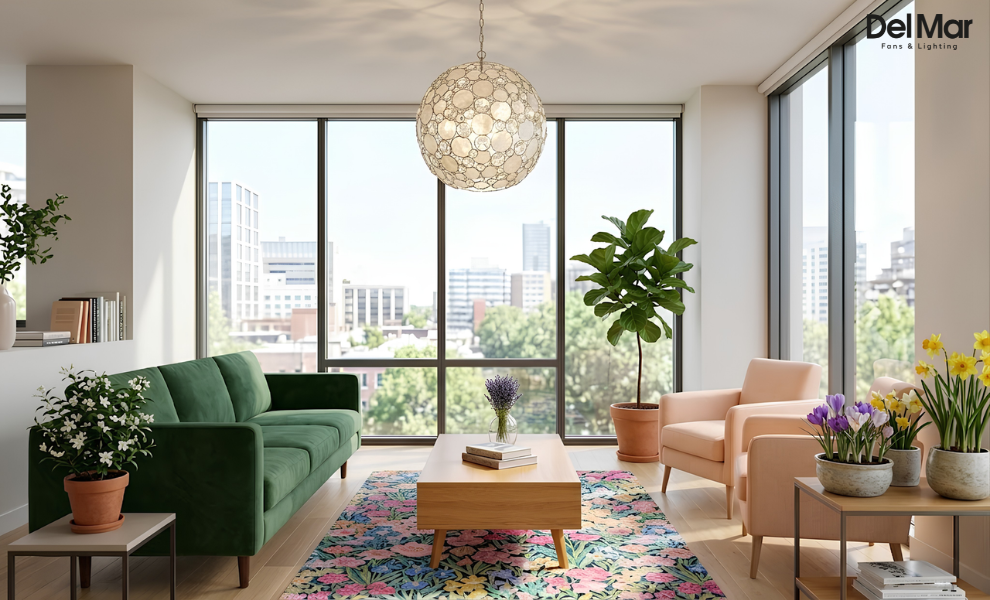
For a more design-forward approach, adding multi light pendant lights can create a striking focal point while maintaining brightness and balance across the room. These fixtures work especially well in open layouts or above seating areas.
These bright living room lighting ideas help create a dynamic and inviting atmosphere.
Benefits of Refreshing Your Living Room Lighting
Updating your lighting for spring offers several advantages:
- Better brightness: Improves visibility and comfort
- Improved mood: Brighter spaces feel more uplifting
- Cost-effective update: No major renovation needed
- Energy efficiency: Reduced electricity usage with modern bulbs
Using energy efficient lighting for living room setups is both practical and environmentally friendly.
Real-Life Lighting Ideas for Different Living Rooms
Small Spaces
- Use mirrors and light-colored walls
- Add layered lighting without overcrowding
- Choose compact fixtures
Dark Rooms
- Focus on natural light living room tips like sheer curtains
- Use multiple light sources instead of one
- Install brighter LED bulbs
Open Layouts
- Define zones with different lighting types
- Combine ambient and accent lighting
- Follow layered lighting living room principles for balance
These ideas naturally incorporate spring lighting ideas for the living room and ensure functionality across layouts.
Common Lighting Mistakes to Avoid
- Over-lighting: Too many bright lights can feel harsh
- No layering: Relying on one light source limits flexibility
- Blocking natural light: Heavy curtains or furniture placement
Avoiding these mistakes ensures your lighting refresh is effective.
- Expert Tips for Perfect Spring Lighting
- Use dimmers to adjust brightness based on time of day
- Combine different light sources for flexibility
- Maintain balance, avoid overly bright or overly dim setups
These small adjustments make a big difference in achieving perfect lighting.
Latest Modern Spring Lighting Trends
Staying updated with modern spring lighting trends can elevate your space further:
Smart Lighting
Control brightness and color temperature with apps or voice assistants.
Minimal Fixtures
Clean, simple designs are replacing heavy, ornate lighting.
Sustainable Materials
Eco-friendly materials like bamboo, recycled metals, and energy-saving LEDs are gaining popularity.
Conclusion
Refreshing your lighting is one of the easiest ways to transform your home for the season. With the right combination of natural light, modern fixtures, and layered lighting techniques, living room spring lighting can completely change how your space looks and feels.
The best part? These updates are simple, affordable, and highly effective, making your living room brighter, fresher, and ready for spring.
Key Takeaways
- Spring lighting focuses on brightness, freshness, and natural light
- Use layered lighting for flexibility and better ambience
- Switch to 3000K–4000K bulbs for a seasonal update
- Maximize daylight with sheer curtains and mirrors
- Upgrade fixtures for a modern look
- Choose energy-efficient lighting for long-term savings
FAQs
1. How can I refresh my living room lighting for a seasonal update?
Refreshing your living room lighting starts with making the most of natural daylight, keep windows unobstructed and opt for light, airy curtains. Replace outdated or dim bulbs with brighter, energy-efficient LEDs, and introduce layered lighting by combining ambient, task, and accent fixtures. Upgrading to modern ceiling lights, floor lamps, or statement pendants can instantly transform the space while enhancing both functionality and style.
2. What type of lighting works best for a fresh spring ambiance?
For a bright and uplifting spring atmosphere, opt for neutral to cool white lighting within the 3000K–4000K range. This color temperature mimics natural daylight, creating a clean, airy feel that enhances colors and improves overall visibility without appearing too harsh.
3. How can I make a dark living room feel brighter and more inviting?
To brighten a dark living room, incorporate multiple light sources instead of relying on a single fixture. Use mirrors to reflect both natural and artificial light, choose lighter window treatments to allow more sunlight in, and switch to high-lumen LED bulbs. Adding wall sconces, table lamps, and floor lamps can help distribute light evenly throughout the space.
4. What bulb color temperature is ideal for living room lighting?
A color temperature between 3000K and 4000K is generally ideal for living rooms. It strikes the perfect balance between warm and cool tones, providing a comfortable, welcoming glow while still offering enough brightness for everyday activities.
5. What are common mistakes to avoid when updating living room spring lighting?
Some common mistakes include relying on a single light source, ignoring layered lighting, choosing the wrong color temperature, and poor fixture placement. Proper planning with a mix of ambient, task, and accent lighting ensures a balanced and functional setup. For a deeper breakdown, check this guide: Fails to Fix: Living Room Lighting Mistakes to Avoid
6. Is layered lighting really necessary in a living room?
Yes, layered lighting is essential for creating a well-balanced and functional living room. By combining ambient lighting (overall illumination), task lighting (for reading or specific activities), and accent lighting (to highlight décor or architectural features), you can easily adapt the space to different moods and needs throughout the day.
7. How can I use natural light more effectively in my living room?
Maximizing natural light involves keeping windows clean and unobstructed, using sheer or light-filtering curtains, and strategically placing mirrors to reflect sunlight deeper into the room. Additionally, choosing light-colored walls and furnishings can help amplify natural brightness and make the space feel more open and inviting.
